
What should you know?
A textile can be a useful starting point for understanding a place, but its meaning is not universal. Ask about the specific maker, community and technique. Keep a photograph’s location clear, and distinguish the Chinchero imagery in this guide from the separate textile traditions of Taquile.
The pattern catches your attention. The person behind it can tell you much more. A thoughtful encounter begins when you stop treating the textile as a decorative image and start asking about the work it represents.
Begin with the maker.
Color may be the first thing you notice. The more revealing questions come afterwards: who made the piece, what materials were used, and how does the maker describe the work? Listening leaves room for an explanation you could not obtain from the pattern alone.
Ask an open question
“What would you like me to understand about this piece?” is a more useful beginning than guessing the symbolism. Avoid assuming that a design means the same thing wherever you encounter it.
Look at material, process and detail.
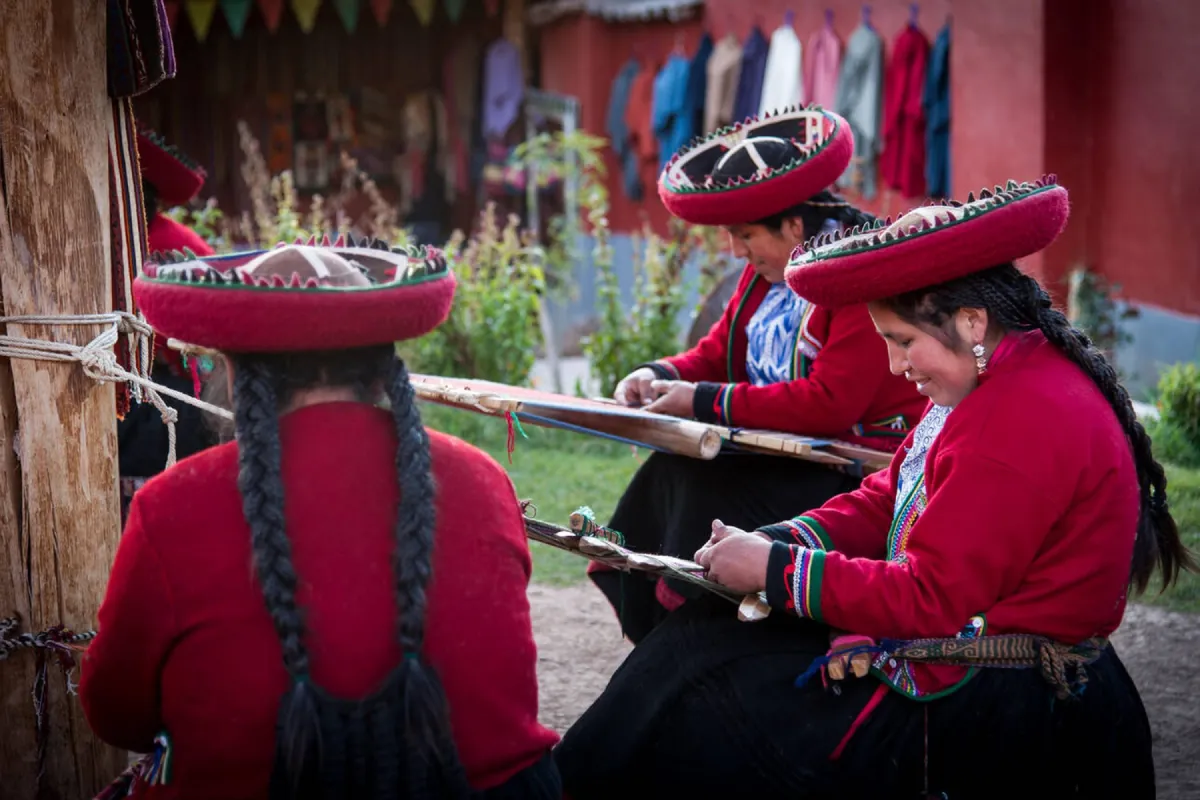
A close view can reveal texture and construction. A wider view places the activity back in its setting. Both are useful, provided the person involved is comfortable with the photograph and the caption identifies the encounter accurately.
The supplied photographs here show Andean textile work in Chinchero. They are not photographs of Taquile. Keeping that distinction visible is part of treating culture as something more specific than a decorative theme.
Leave room for distinct traditions.
Peru Travel describes Taquile’s textile art as part of the island’s cultural identity. That is an invitation to learn about Taquile itself, not a reason to merge different Andean communities into a single story.
Connect the story to the place
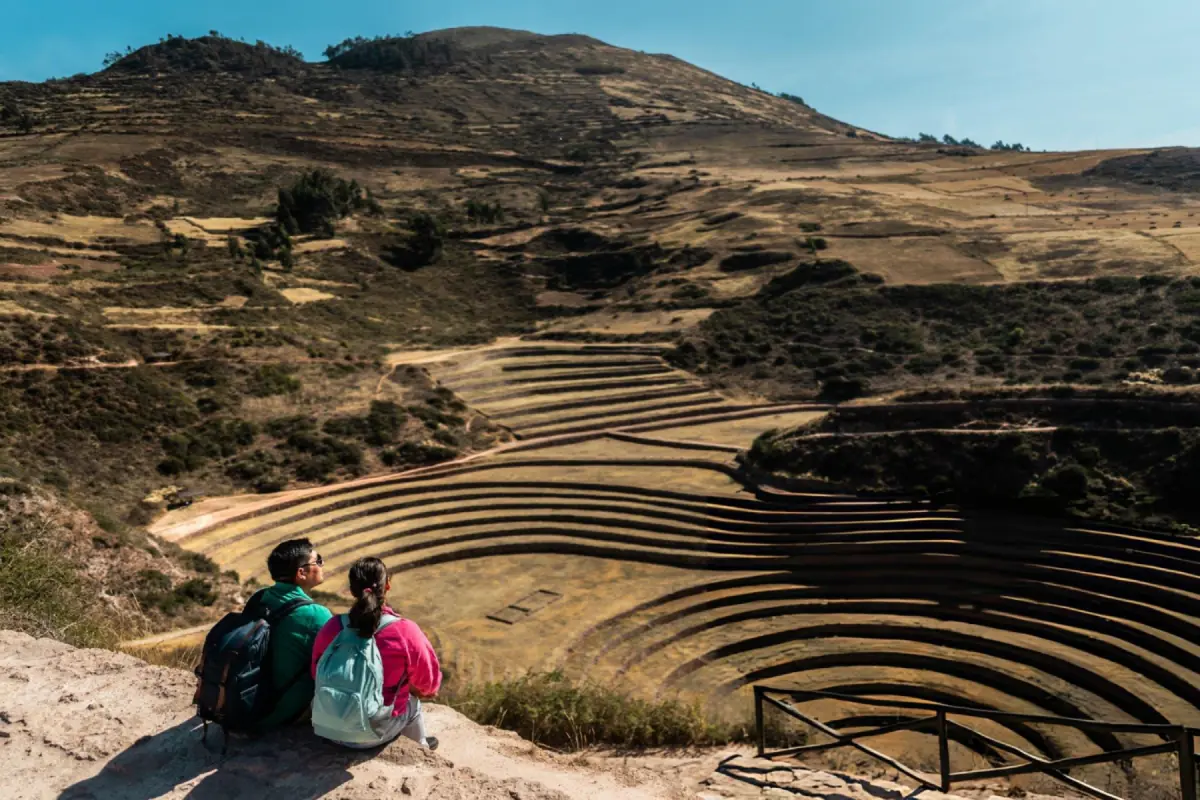
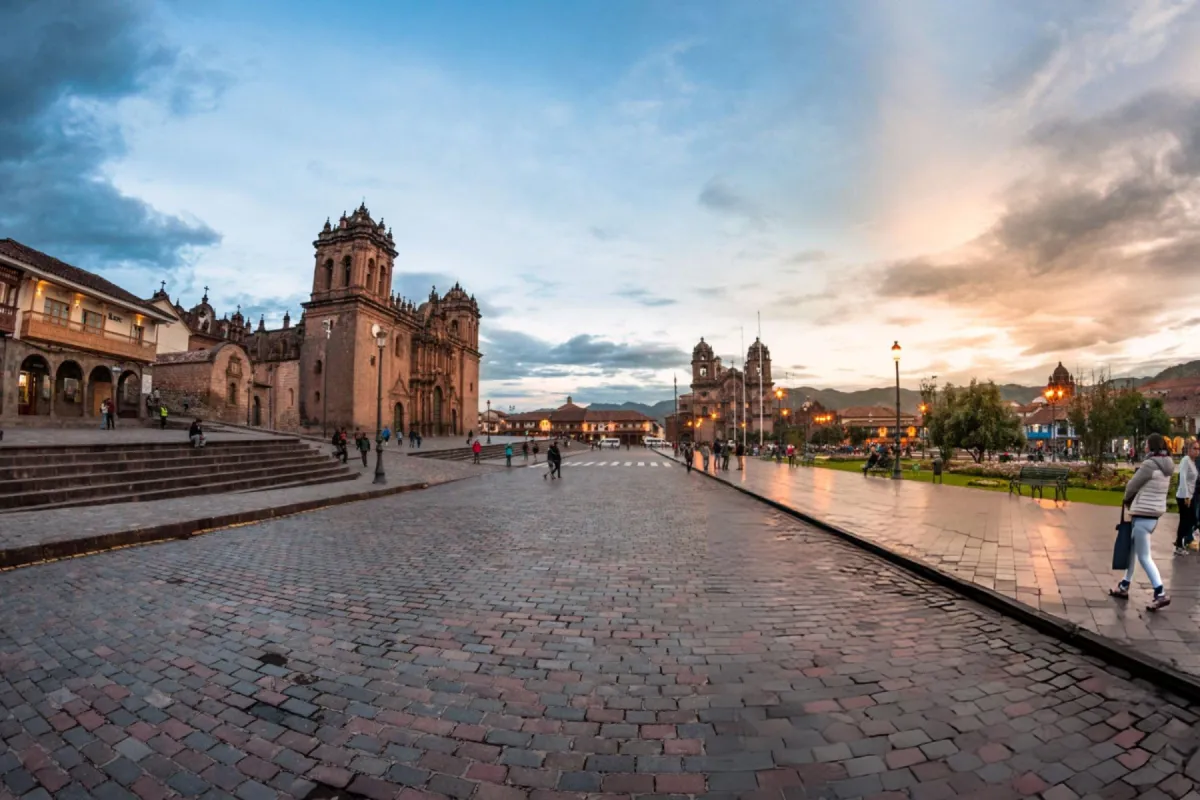
Read about the setting around Lake Titicaca alongside the textile tradition. In the Cusco region, the Sacred Valley guide offers a different geographical context.
Choose a thoughtful encounter.
Give a demonstration or conversation enough time to unfold. If you want to buy something, ask about the piece directly rather than treating every object as interchangeable.
Photographs, purchases and participation are separate decisions. Ask permission for each where appropriate. You can appreciate someone’s work without turning their workspace or everyday life into a performance for your camera.
The place in context
© OpenStreetMap contributorsThis map is for geographical orientation. It does not define a visitor circuit, transport route or current access conditions.
Location reference; this map does not define an approved route.
| Your starting point | What to explore next |
|---|---|
| A place that interests you | Which aspect of its landscape, history or everyday life would you like to understand? |
| Your time and pace | What would you like to spend more time on, and what could you leave out? |
| Practical arrangements | Which current access, transport and service details need confirmation for your dates? |
Sources and further reading
- Peru Travel · Taquile PROMPERÚ · Peru Travel Accessed
- Peru Travel · Places in the Sacred Valley PROMPERÚ · Peru Travel Accessed
- OpenStreetMap · location reference OpenStreetMap contributors