
How is La Compañía different from Cusco Cathedral?
La Compañía de Jesús is the Jesuit church on the Plaza de Armas, distinct from the cathedral. Its highly articulated façade and Baroque interior make it a useful architectural contrast, with separate admission and access arrangements.
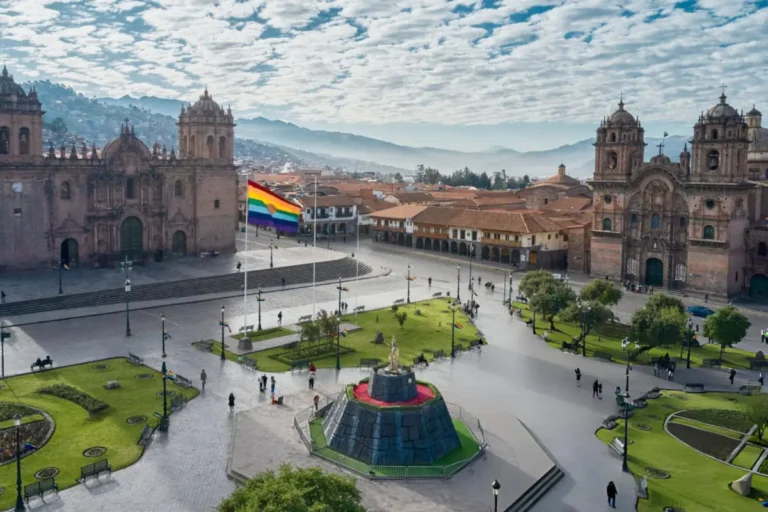
On Cusco’s main square, La Compañía de Jesús holds its own beside the much broader cathedral complex. Its façade draws the eye upward through columns, niches and towers. Give it an individual visit rather than treating it as a smaller version of the building across the square.
An Inca palace beneath a colonial story
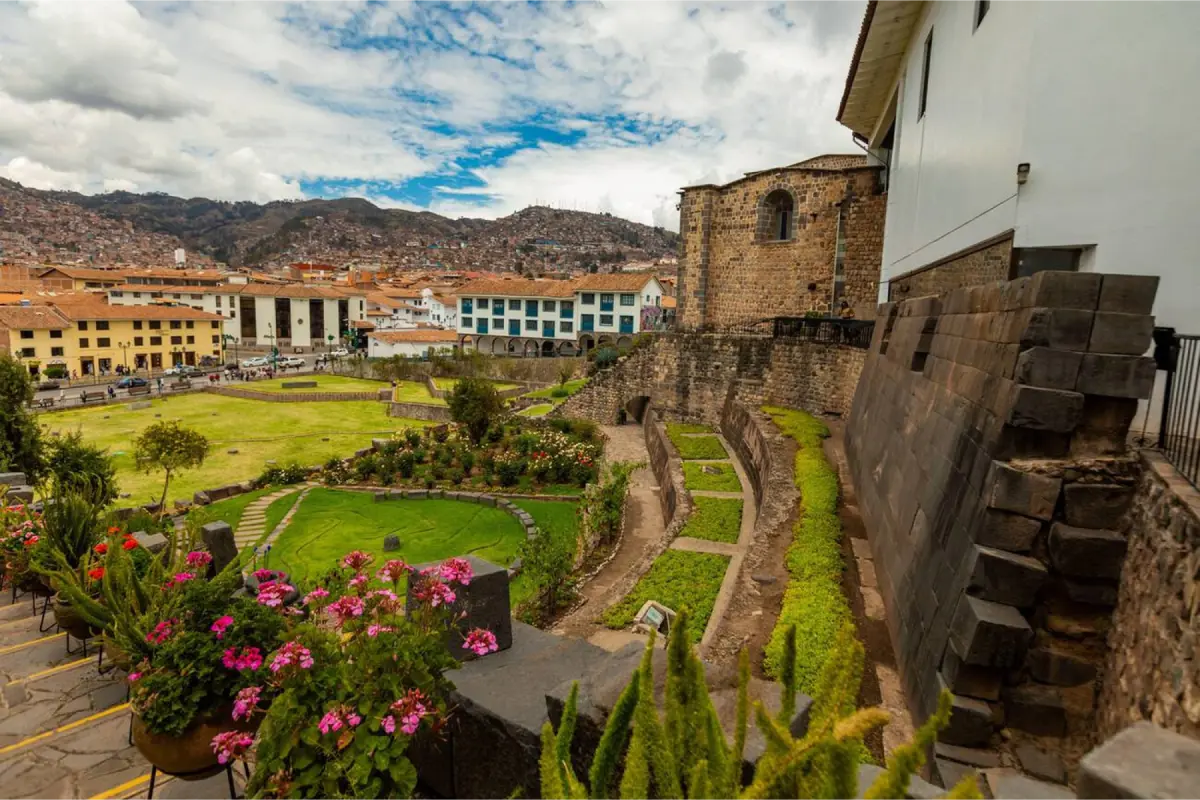
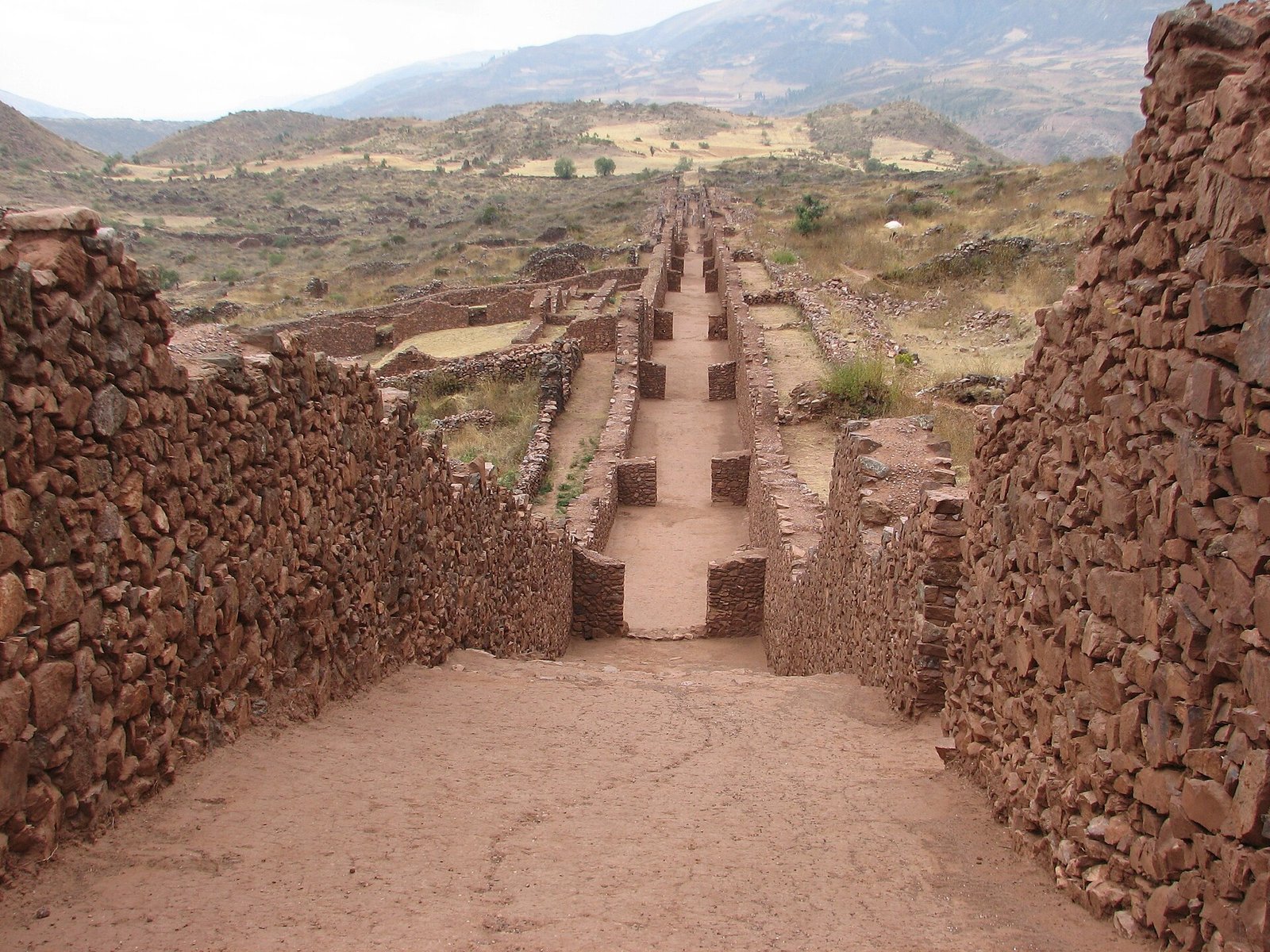
The site is associated with Amaru Kancha, the palace linked to Huayna Capac. The later Jesuit church belongs to the transformation of Cusco after the Spanish invasion. Nearby Inca masonry helps make that longer urban history visible, but not every wall or doorway should be assigned to a named ruler without evidence.
Rebuilding after the 1650 earthquake
The original church was damaged by the great earthquake of 1650. The later building was completed in the seventeenth century, with 1668 commonly given for the culmination of that reconstruction. This helps explain why Cusco’s churches cannot all be described as intact sixteenth-century buildings: earthquakes, rebuilding and restoration shaped what visitors see.
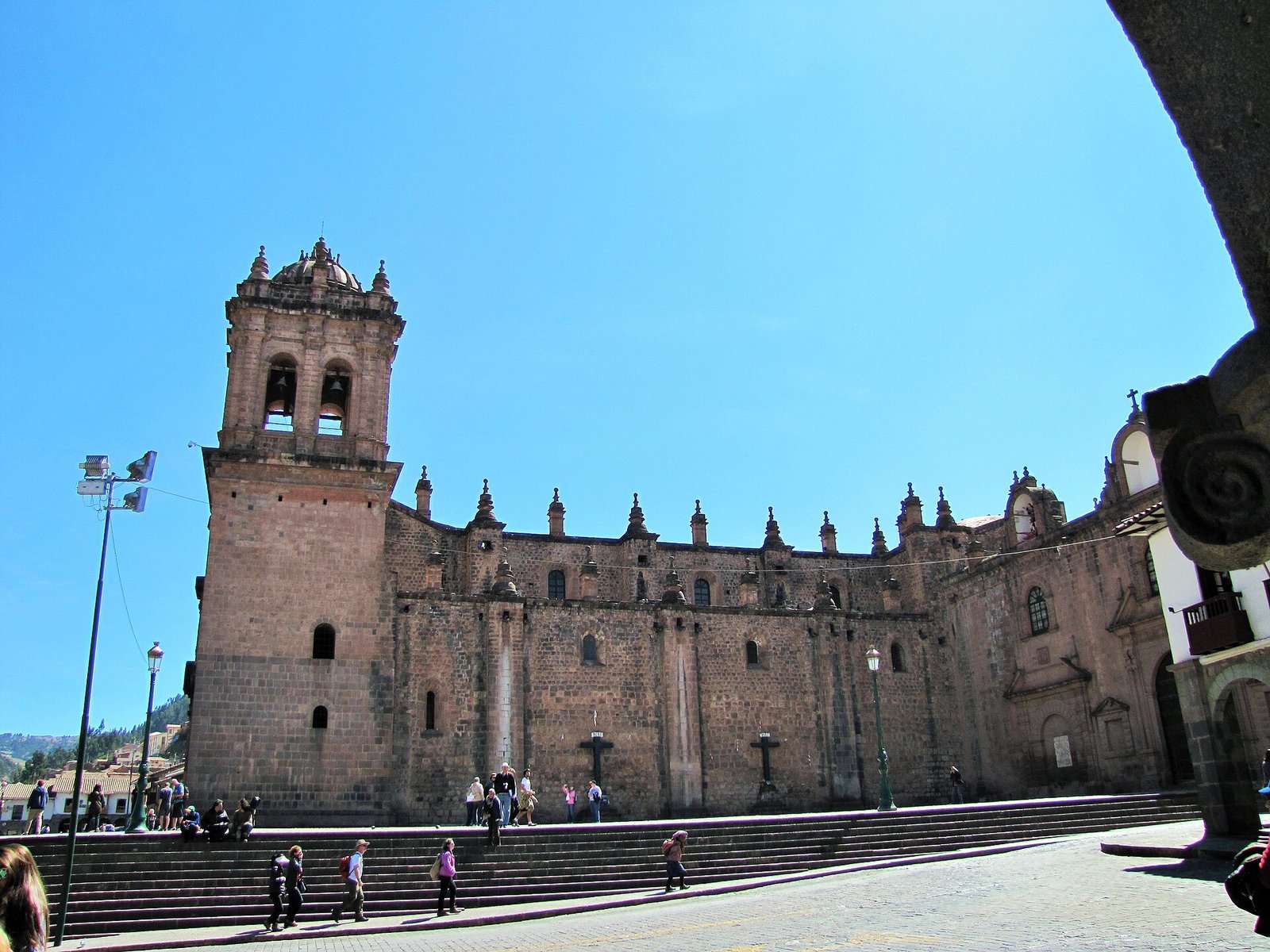
Read the façade as a composition
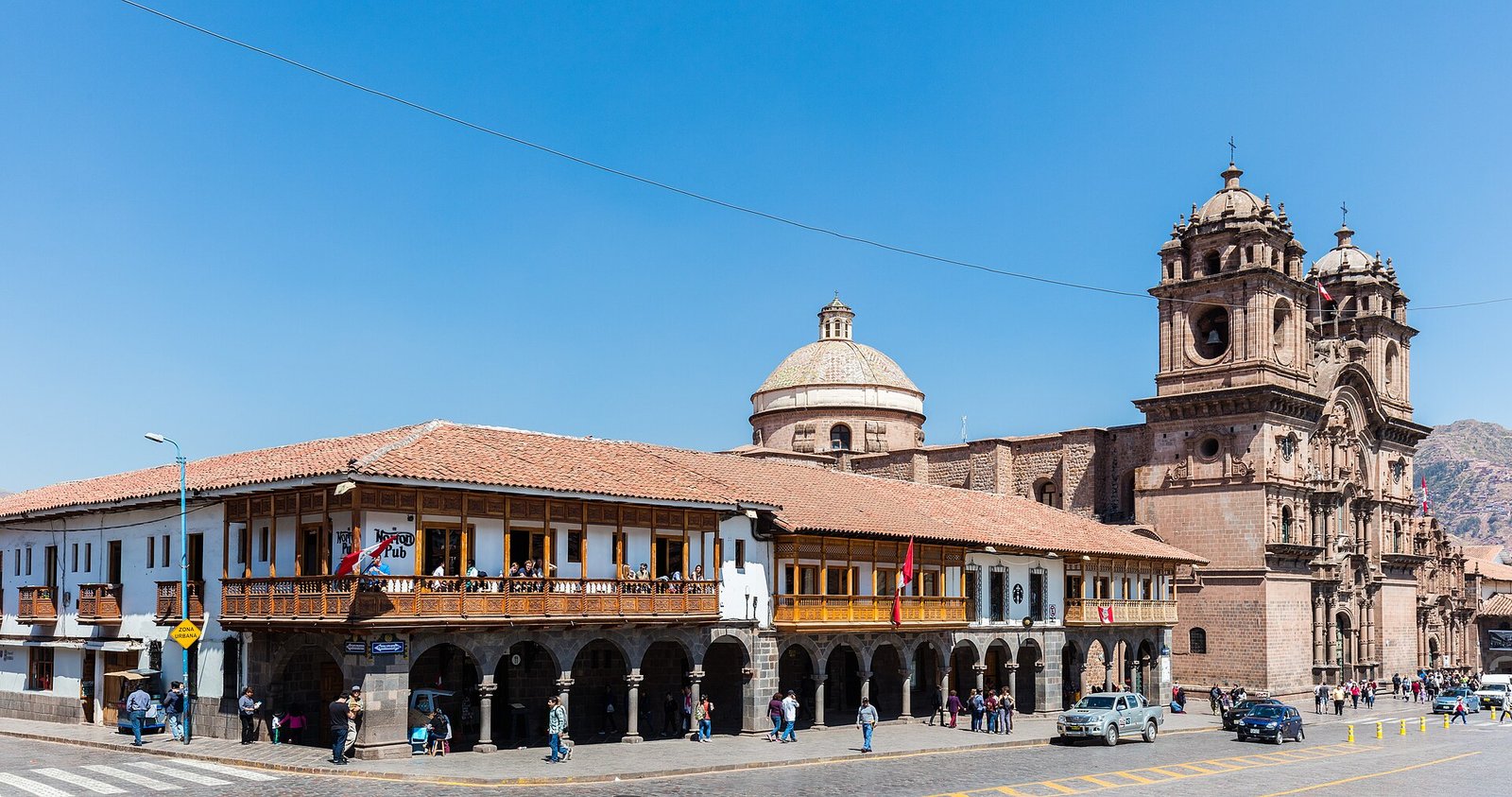
Start at the doorway and follow the vertical movement through the central section. Then compare it with the flanking towers. The carving works at several scales: distant silhouette, arrangement of columns and individual details. A wide photograph and a closer view can reveal different aspects without requiring a dramatic filter or an exaggerated claim that it is the finest church on the continent.
What an interior visit adds
Inside, architecture and gilded furnishings create a different experience from the stone exterior. Give yourself time to understand the arrangement of the nave and altar before moving between individual works. Ask which spaces are open and what photography rules apply. If an upper viewpoint is available, confirm its access conditions; it should not be treated as a guaranteed feature for every visit.
| Focus | What it adds | Keep in mind |
|---|---|---|
| La Compañía | Vertical façade and Jesuit history | Confirm its own visitor arrangements |
| Cathedral | Larger complex and a different institutional history | A separate visit and ticket check |
| San Blas | Neighborhood church and carved pulpit | Allow for the uphill approach |
The rivalry story in context
Accounts of the church’s reconstruction often discuss tensions over its ambition beside the cathedral. Such stories can make the square memorable, but they should not replace the buildings themselves. Compare proportions and placement, then ask your guide which details come from documents and which belong to popular retelling.
A manageable visit around the square
Choose La Compañía and the cathedral as two separate priorities, with time between them to look at the Plaza de Armas. If you prefer a smaller-scale artistic experience, San Blas offers a different conversation about carved wood and neighborhood life. Avoid purchasing a ticket on the assumption that every religious monument belongs to one universal pass.
Frequently asked questions
Is La Compañía included with cathedral admission?
Do not assume so. Check the current coverage of the exact ticket you are considering.
Can I photograph the interior?
Follow the current rules displayed by the church and ask before using a camera. Exterior photography does not establish permission indoors.
Can I see it from the main square?
Yes, the façade forms part of the Plaza de Armas setting. Entering the church is a separate visit.
Sources and further reading
- MINCETUR: La Compañía de Jesús MINCETUR Accessed
Photography credits
Iglesia de la Compañía de Jesús, Plaza de Armas, Cusco, Perú, 2015-07-31, DD 58.JPG by Diego Delso · CC BY-SA 4.0; Cusco Cathedral 1.jpg by Chuck Moravec · CC BY 2.0. Display sizes may be reduced by WordPress; photographs retain their original attribution.