
Is Santa Catalina in Cusco the same monastery as Santa Catalina in Arequipa?
No. Cusco’s Santa Catalina is a separate religious complex near the Plaza de Armas, associated with the former Acllahuasi site and a museum of religious art and monastic life. Confirm the Cusco location and distinguish museum admission from church access.
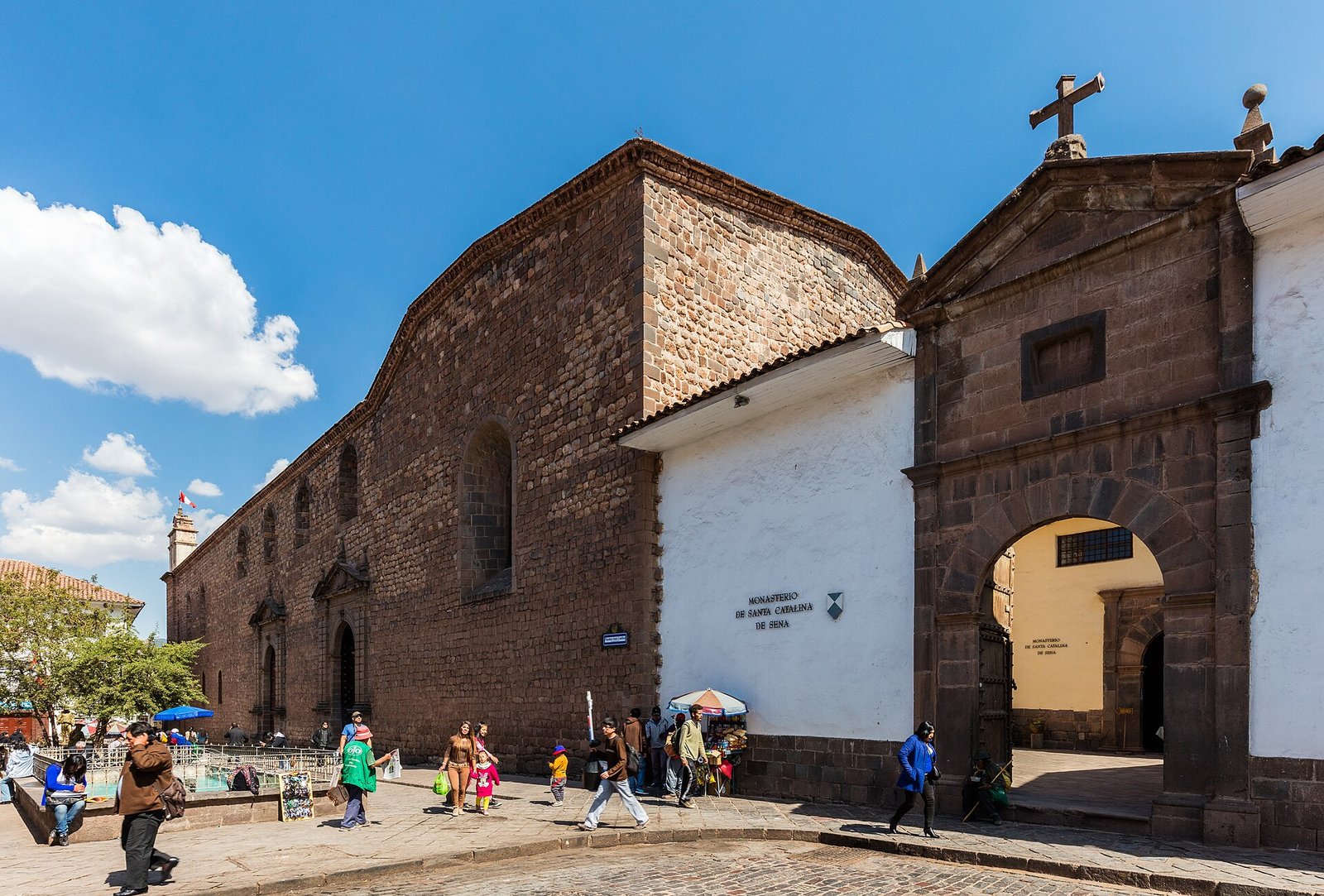
A short distance from the Plaza de Armas, Santa Catalina offers a different scale of cultural visit. Rather than a monumental exterior dominating a square, the interest lies in paintings, objects and spaces connected with a religious community. Its name is familiar, but it should never be illustrated with photographs of the monastery in Arequipa.
Place the Cusco site correctly
The complex is associated with the site of the Inca Acllahuasi. That earlier history and the later monastery are related layers, not interchangeable institutions. Translating the history requires care: a broad analogy between enclosed religious communities does not prove that their roles, organization or beliefs were the same.
Look for stories across a series of paintings
A series invites a different kind of viewing from a single celebrated canvas. Follow recurring figures and episodes, then notice how the composition changes from one scene to another. The monastery’s collections include works connected with Santa Catalina and the Cusco painting tradition. Use the museum’s labels and current interpretation for individual attributions.
Objects bring the scale back to daily life
Religious art is only part of the experience. Furnishings and objects associated with monastic life can help connect an institution’s larger history with daily activity. Rather than assuming that every object remains in the place where it was originally used, ask how the collection is displayed and what its provenance is.
The chapter house and painted surfaces
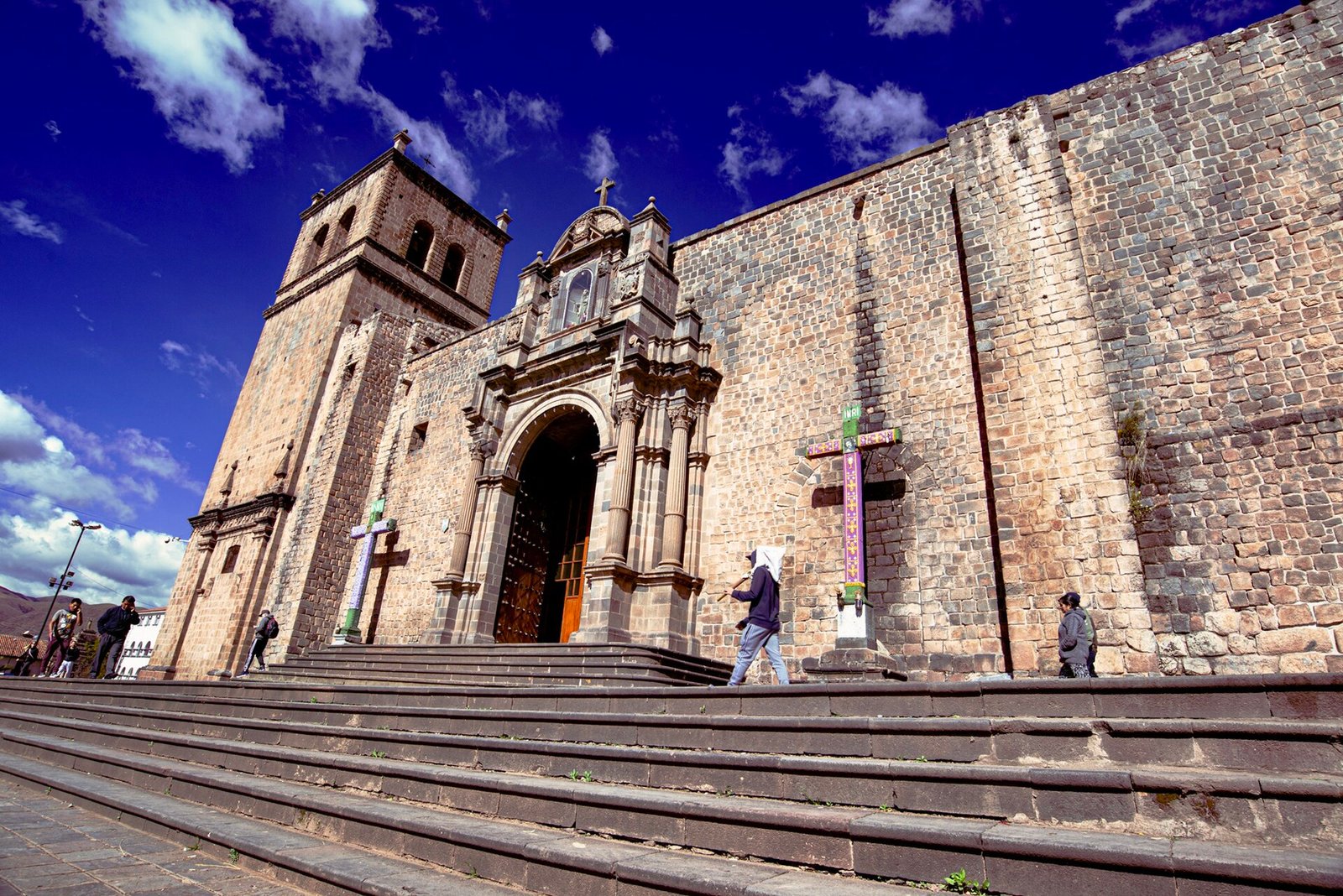
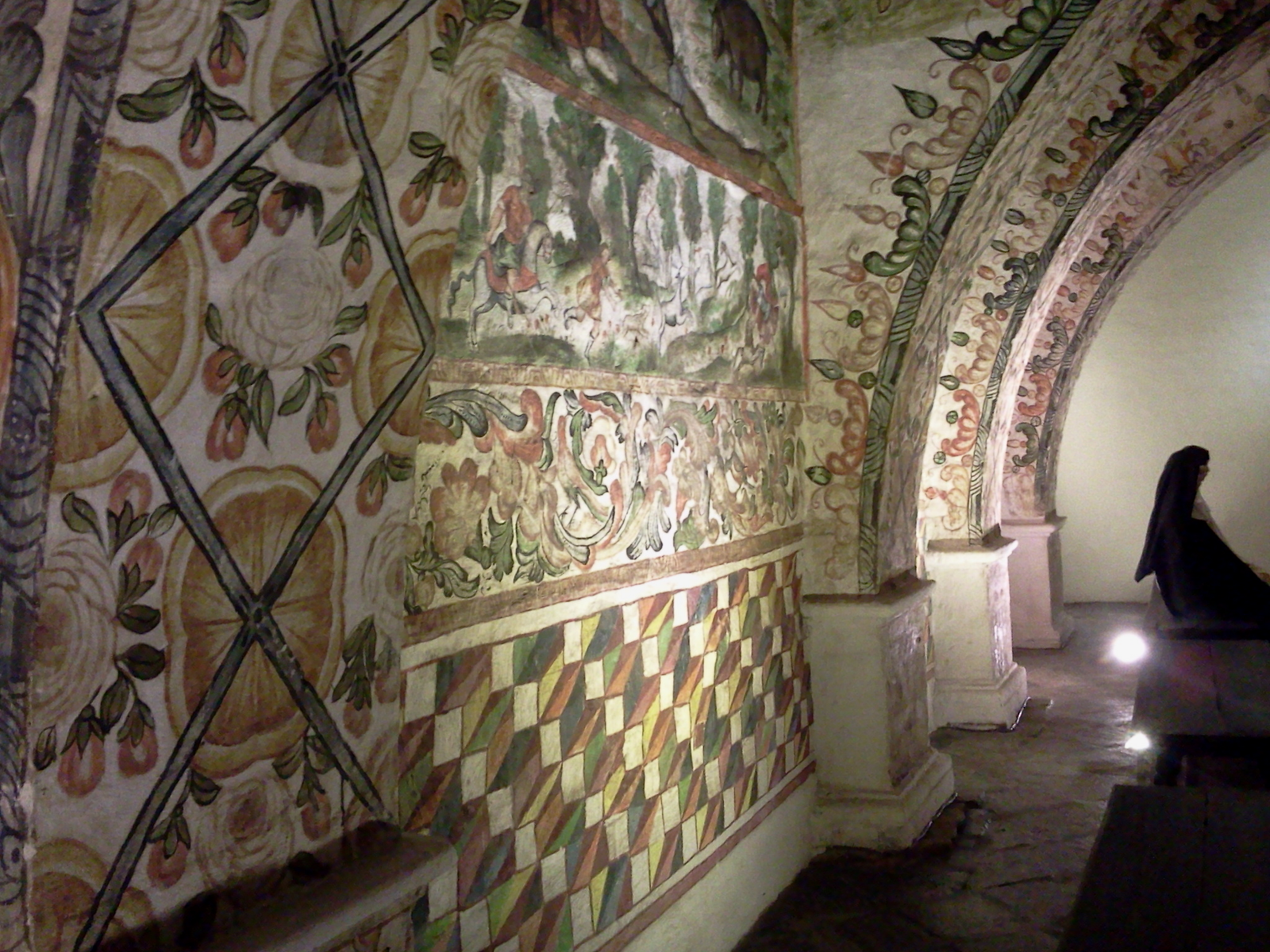
The chapter-house murals provide another way of encountering the complex: painting becomes part of the room, not only something framed on a wall. Follow the current visitor route and restrictions. Photographs supplied in this guide document particular views; they do not guarantee that every room or work will be available on your travel date.
| Focus | What it adds | Keep in mind |
|---|---|---|
| Paintings | Read a series through repeated figures and episodes | Use current labels for attribution |
| Rooms and objects | Connect art with the setting and daily life | Do not assume every object is in its original position |
| Visitor access | Separate museum entry from worship | Respect private areas and photography rules |
Museum, church and private community
These are not automatically one unrestricted visitor space. Museum hours, church services and the privacy of the religious community need separate consideration. Enter only the areas included in the public route, and ask before taking photographs. A quiet visit is a better fit here than treating every room as a backdrop for a posed image.
A focused cultural pairing
Santa Catalina can complement the cathedral or San Blas for travelers interested in religious art. It can also stand alone when you prefer to look at fewer things in greater detail. Choose the pairing according to your interests rather than trying to complete every church in the historic center during one afternoon.
Frequently asked questions
Can I use an Arequipa Santa Catalina ticket here?
No. These are different institutions in different cities.
Is the entire monastery open to visitors?
No unrestricted access should be assumed. Follow the museum’s designated public route.
Is the church always open with the museum?
Church services and museum visiting arrangements can differ. Confirm both directly.
Sources and further reading
- MINCETUR: Santa Catalina in Cusco MINCETUR Accessed
Photography credits
Iglesia y convento de Santa Catalina, Cusco, Perú, 2015-07-31, DD 72.JPG by Diego Delso · CC BY-SA 4.0; Santa-Catalina-Cusco-2.png by El Huinca · CC BY-SA 4.0. Display sizes may be reduced by WordPress; photographs retain their original attribution.