
Are the Maras salt pans only a scenic viewpoint?
No. The small pans form a working salt-production landscape associated with local families and communities. The view is striking, but the water system and labor behind it matter more than a photograph. Respect the designated visitor area and check current access rules before traveling.
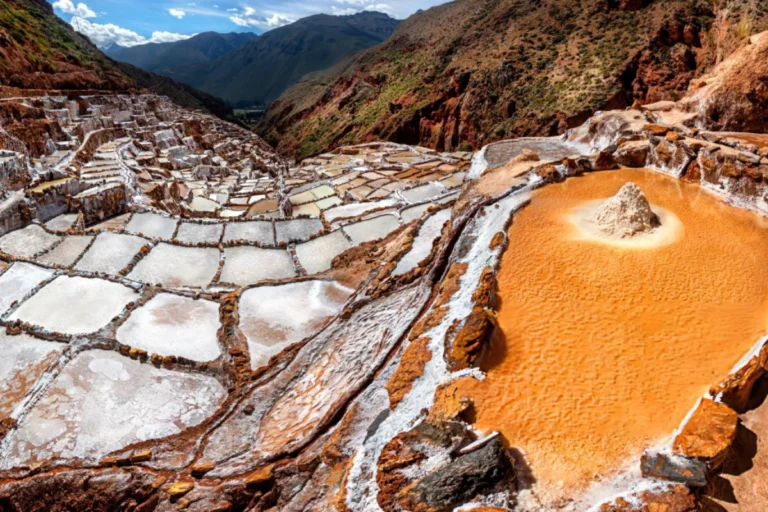
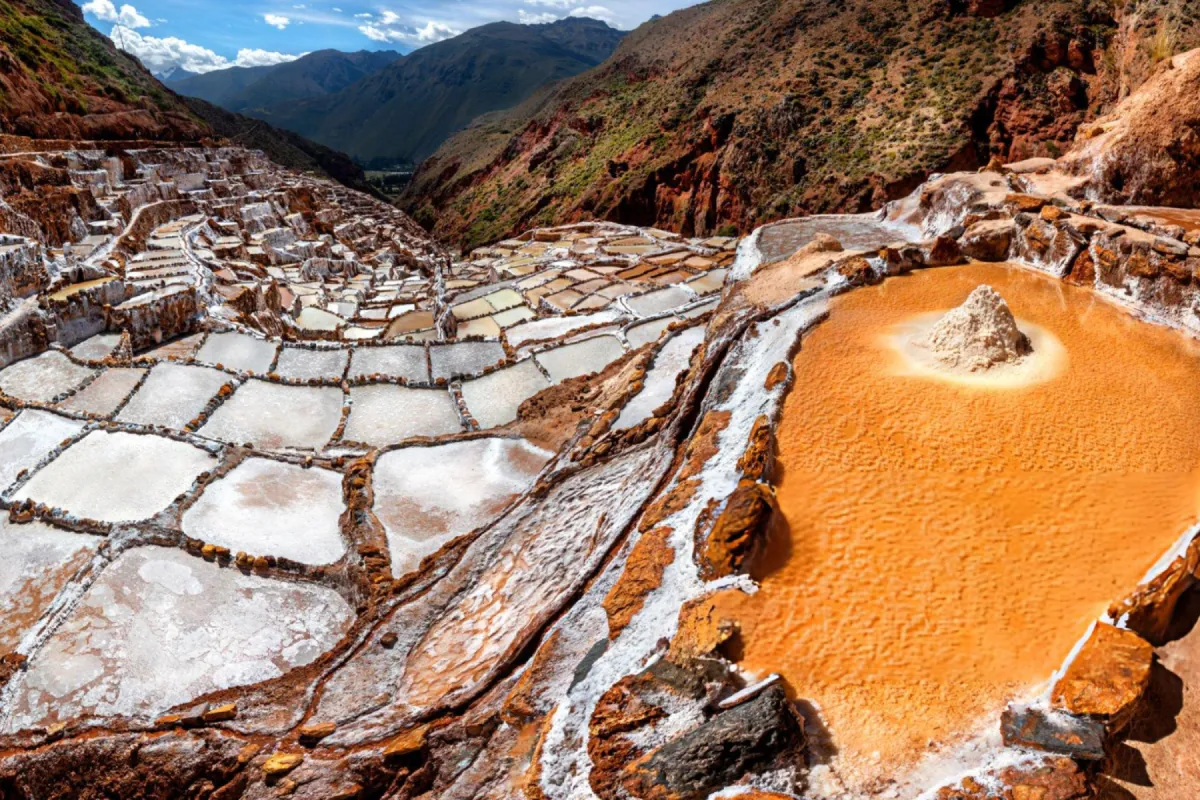
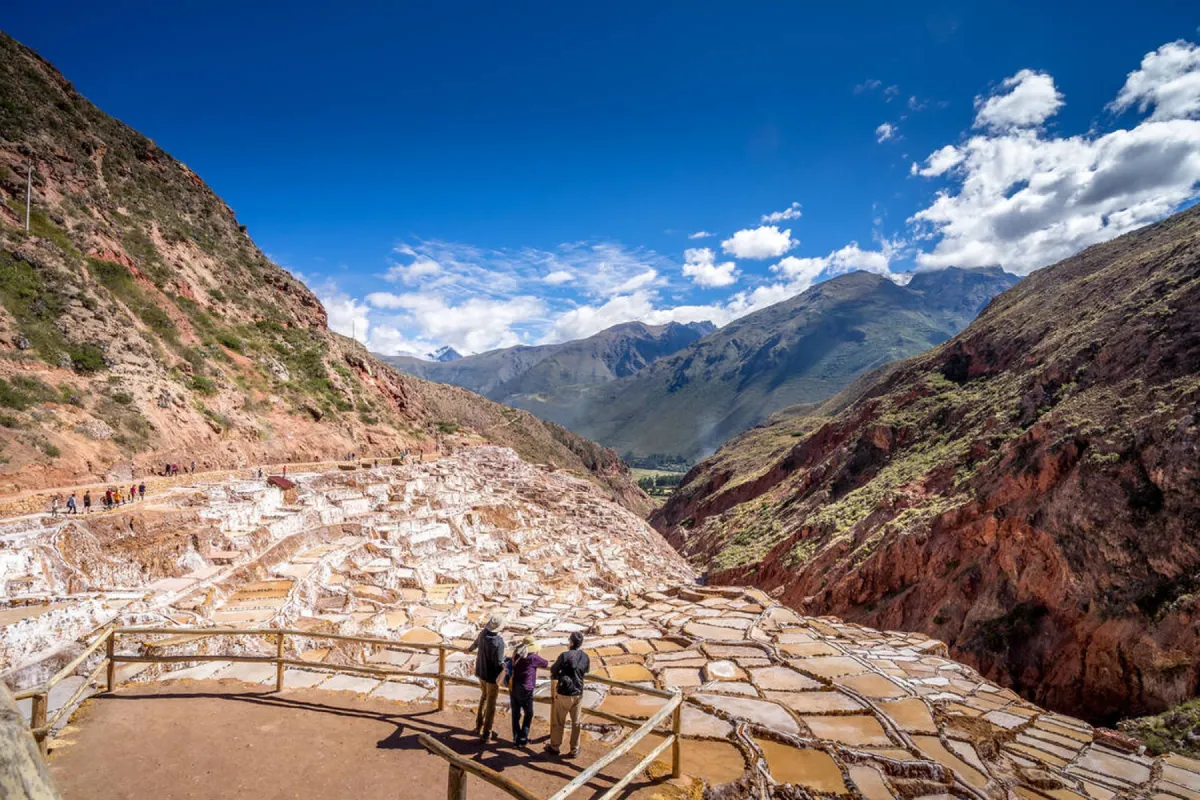
From a distance, the salt pans near Maras look like a pale mosaic laid across a steep hillside. Up close, the essential story is not their color but their operation: water, channels, individual pans and the people who maintain them. Treating the salineras as a working cultural landscape changes how you look and how you visit.
How the landscape works
Mineral-rich water is directed through a network of channels into small evaporation pans. The pattern is the result of repeated maintenance and harvest, not an accidental geological formation. PROMPERÚ describes the salt pans as one of the distinctive places of the Sacred Valley, while its community-tourism material connects the work to local people.
Production changes with weather and work cycles, so a photograph from another season is not a promise about what you will see. The colors of individual pans can vary. A respectful visit gives room to learn about the process without assuming access to the working surface.
Why the water matters
Without a managed flow, the striking grid would not function. Looking at the feeder channels helps you see a system of labor and cooperation. The salt itself can be purchased as a local product, but avoid treating health claims or supposed medicinal properties as established simply because a label says so.
Do not confuse Maras with Moray
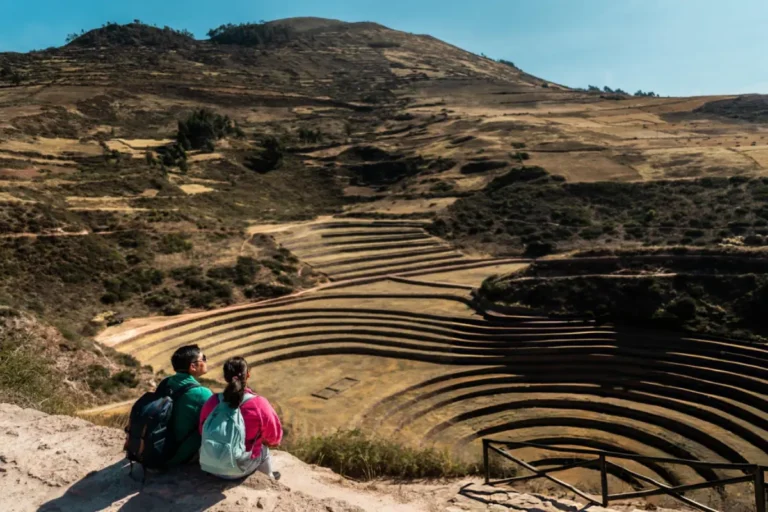
The Moray terraces are an archaeological landscape associated with Inca agriculture; the Maras salt pans are a productive salt landscape. They are close enough to feature in the same travel day, but they are different places with different access and interpretation. The town of Maras is another part of the story and should not disappear behind the salineras.
Plan around the actual visit
Check the current viewing arrangements, ticket information and transport before departing. Stay within visitor areas, ask before photographing workers and follow local instructions. A combined Maras and Moray trip needs time for the road as well as both stops. If you have only a short window, decide whether your main interest is the living salt economy or the Inca agricultural landscape.
This article offers context rather than fixed operating details. Prices, routes and access can change, and the local owner’s current guidance should control the visit.
A closer look at salt production
The landscape is a repeated sequence of water delivery, evaporation, harvest and maintenance. Which activities are visible depends on conditions and work cycles. Observe from designated visitor areas. If you purchase salt, ask about its origin and intended culinary use rather than accepting unsupported therapeutic claims.
| Focus | What to consider | Practical choice |
|---|---|---|
| Water supply | Channels distribute mineral-rich water | Do not block or step across working channels |
| Evaporation pans | Weather and maintenance affect appearance | A photograph does not guarantee the same colors on your date |
| Local products | Salt connects the view with ongoing work | Check origin and product labeling |
Questions to carry forward
Can I walk among the salt pans?
Use only the areas currently designated for visitors. The pans and water channels are part of an active production landscape.
Are the salt pans and Moray covered by the same visit?
They can be paired geographically, but they are different attractions. Verify each site's current entry arrangements independently.
Sources and further reading
- PROMPERÚ: Maras–Moray PROMPERÚ Accessed
- PROMPERÚ: Sacred Valley communities PROMPERÚ Accessed