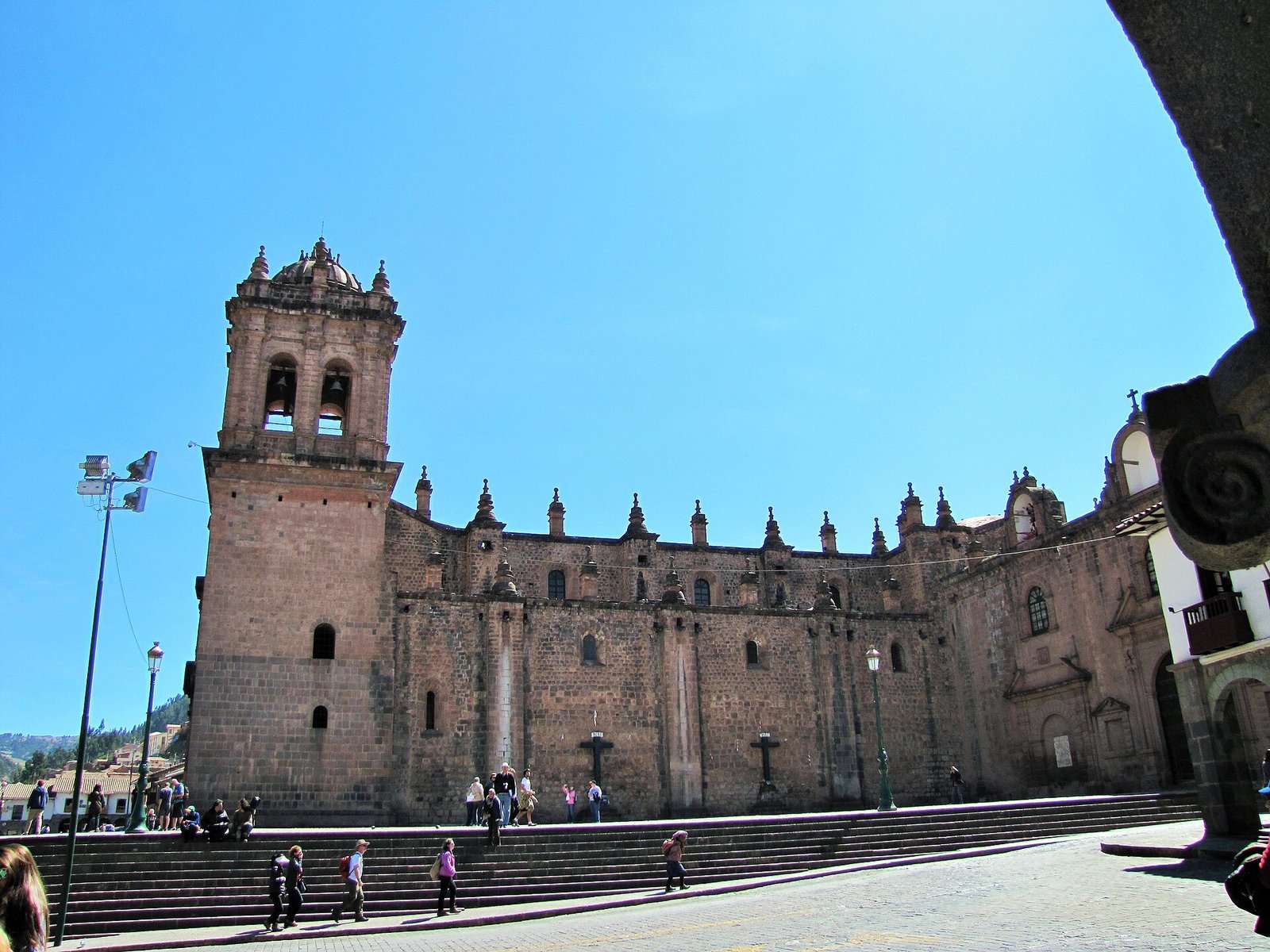

Is Pisac only a market stop?
No. Pisac brings together a hillside archaeological park, a lived-in valley town and a market tradition. The park and market need separate time and have different access arrangements. Choose which story matters most to you before squeezing both into a rushed Sacred Valley day.
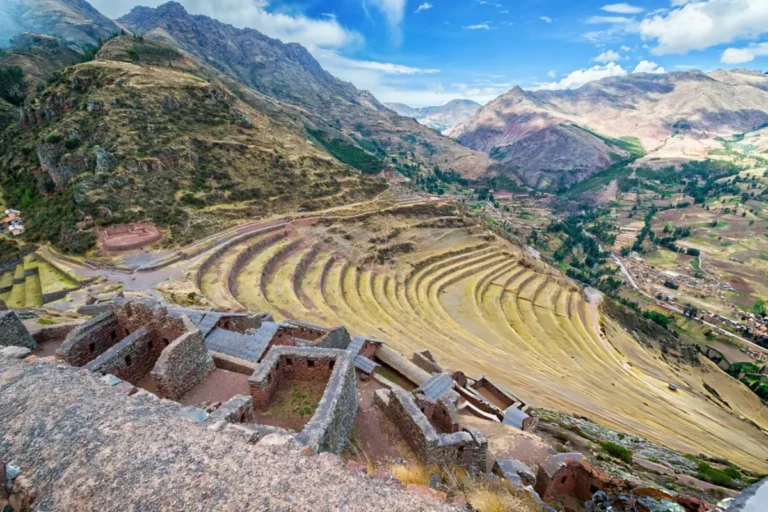
Pisac is often introduced with a single photograph: colorful textiles in a market, or terraces tracing a steep hillside. Both are true, but neither is the whole place. The archaeological park sits above the town; the settlement and its market belong to daily valley life. Reading them together gives a more useful picture than treating Pisac as one quick stop.
Look up before walking through the town
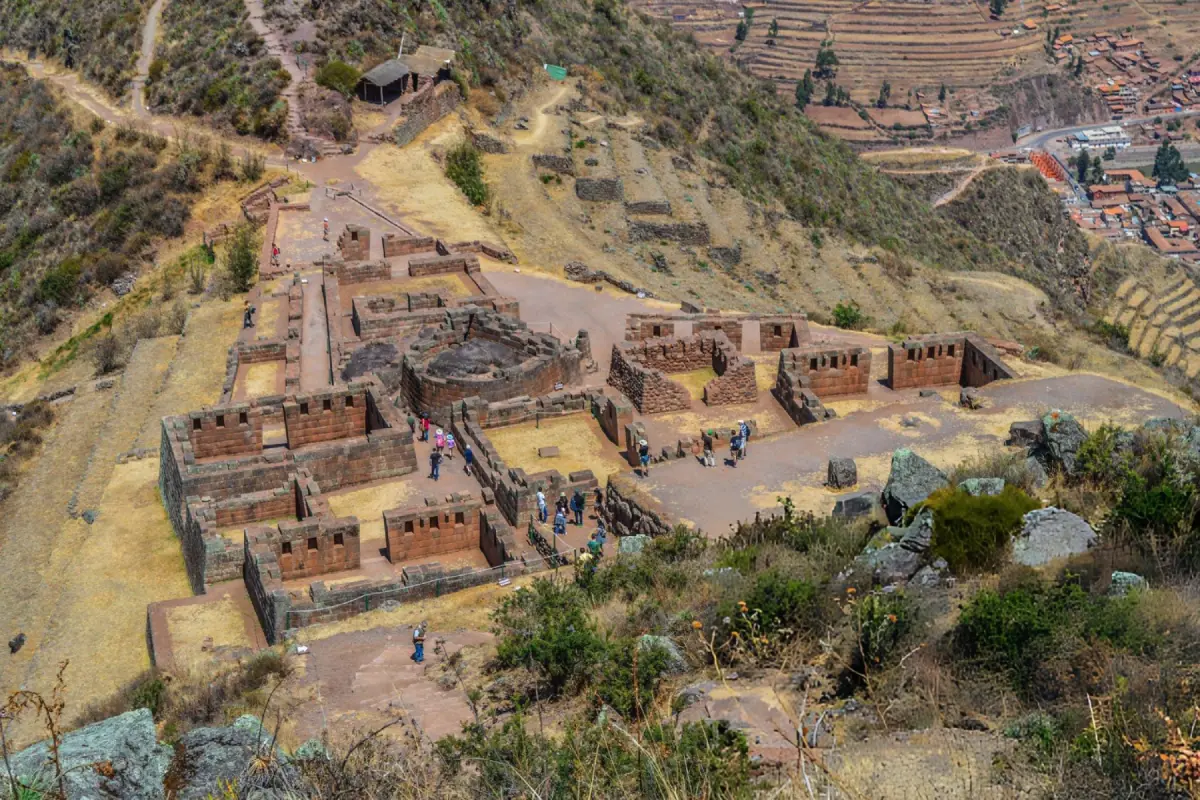
The terraces are visible across the slope long before you understand their scale. In the archaeological park, paths connect agricultural work, built spaces and broad views of the valley. Cusco’s Culture authority describes Pisaq as a royal estate associated with Pachacútec. That interpretation gives context to the site without turning every feature into a settled answer.
Paths and exposed slopes demand more time than the map may suggest. Follow the approved circuit and ask about current entry arrangements. The upper complex and the town are separate places; do not plan a continuous walk between them without checking the route and your own comfort with the terrain.
Why the terraces matter
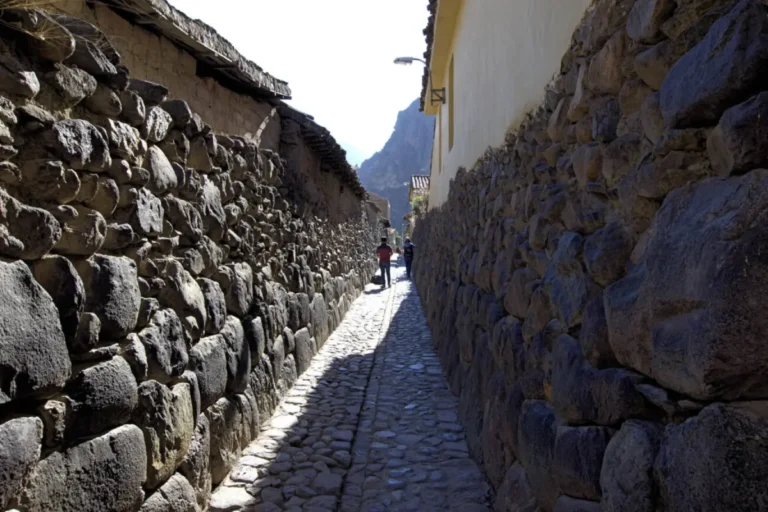
They show how slopes could be organized for cultivation and how an Inca landscape could combine practical and ceremonial spaces. Step back to see the contours before focusing on individual walls. If you want another expression of Inca architecture in the valley, compare Ollantaytambo, where a still-inhabited town sits beside the archaeological park.
The market belongs to the present
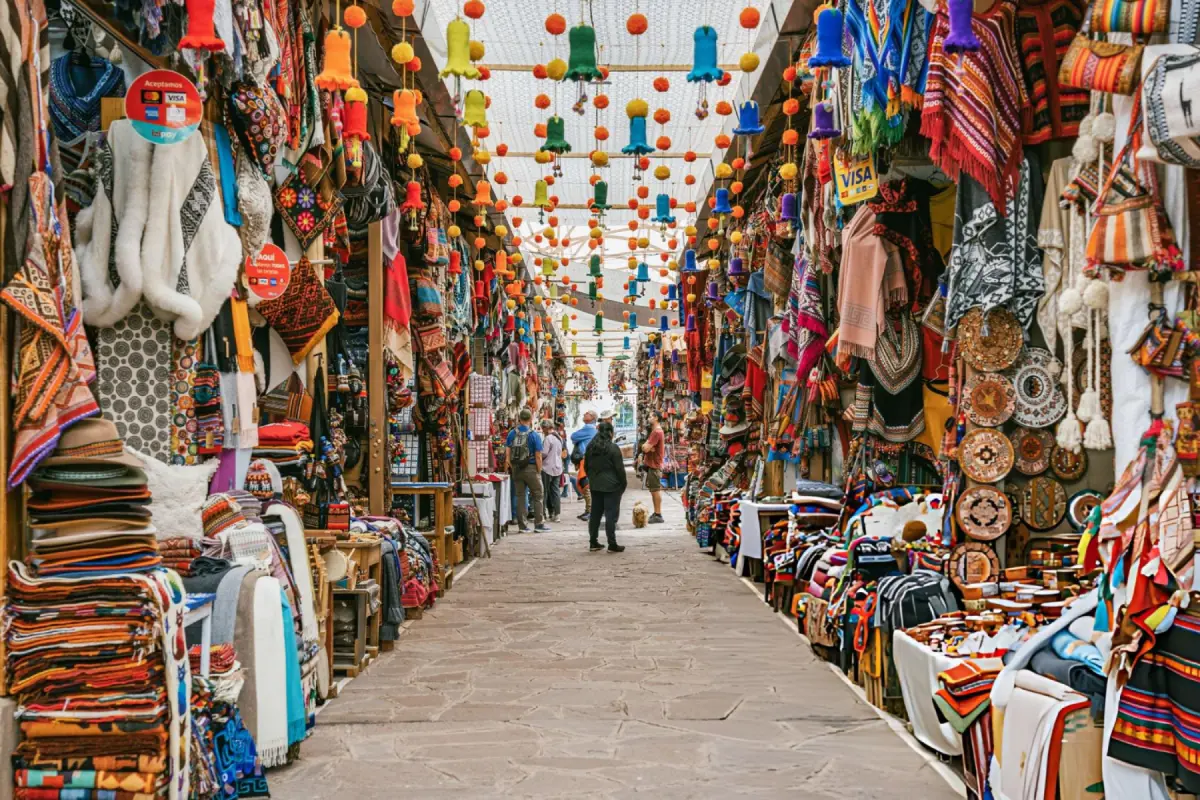
Pisac’s market is a place to meet makers and vendors, not a museum attached to the ruins. Look at what is actually made locally, ask before photographing people and allow a conversation about technique or materials to lead your purchase. Stalls and activity can vary by day; do not build an itinerary around an unverified promise that every vendor will be present.
The town also has streets, food and local religious life beyond the market square. A slower visit can make room for those layers instead of making the market an obligatory shopping exercise.
Choose your Pisac day
If archaeology is the priority, give the park sufficient time and organize transport between the entrance and the town. If craft and town life matter most, begin there and add the site only if the remaining time is realistic. A full Sacred Valley route may include several places, but distance on a map is only one part of the schedule.
Confirm official visiting rules, ticket coverage and any weather-related changes shortly before travel. Wear comfortable footwear for uneven surfaces and protect yourself from highland sun. This is an editorial guide to making a choice, not a substitute for current local instructions.
Park or market: decide before departure
A market-led visit and an archaeological visit can share a day, but they answer different interests. The market offers conversations about objects and their makers; the hillside park offers a broader historical landscape. Avoid evaluating either through a promise of a fixed number of minutes. Road access, the open circuit and your own pace should shape the sequence.
| Focus | What to consider | Practical choice |
|---|---|---|
| Archaeology priority | Give the hillside park the main part of the visit | Arrange the connection back to town |
| Craft priority | Ask about makers, techniques and origin | Market activity is not identical every day |
| Combined visit | Keep distinct time for both places | Do not turn one into a rushed add-on |
Questions to carry forward
Is the market inside the archaeological park?
No. The market is in Pisac town, while the archaeological park occupies the hillside above it. Plan transport and time for each separately.
Does Pisac need a full day?
That depends on your interests and the route. A focused park visit and an unhurried town visit take more time than a brief market stop.
Sources and further reading
- Cusco Culture: Pisaq Archaeological Park Cusco Culture Accessed
- PROMPERÚ: Sacred Valley PROMPERÚ Accessed