
Why stop at Raqchi?
Raqchi offers an unusual combination of stone-and-adobe monumental architecture, storage structures and connections with the road toward the southern Andes. Its location makes it a distinct travel decision, rather than another quick stop on Cusco’s northern circuit.
Raqchi is a reminder that Inca architecture cannot be reduced to one material or one familiar silhouette. A tall surviving wall combines stone and adobe, while storage structures and open spaces spread beyond it. The complex belongs to the journey toward the southern Andes, not to the short northern circuit above Cusco.
Look up, then look beyond the central wall
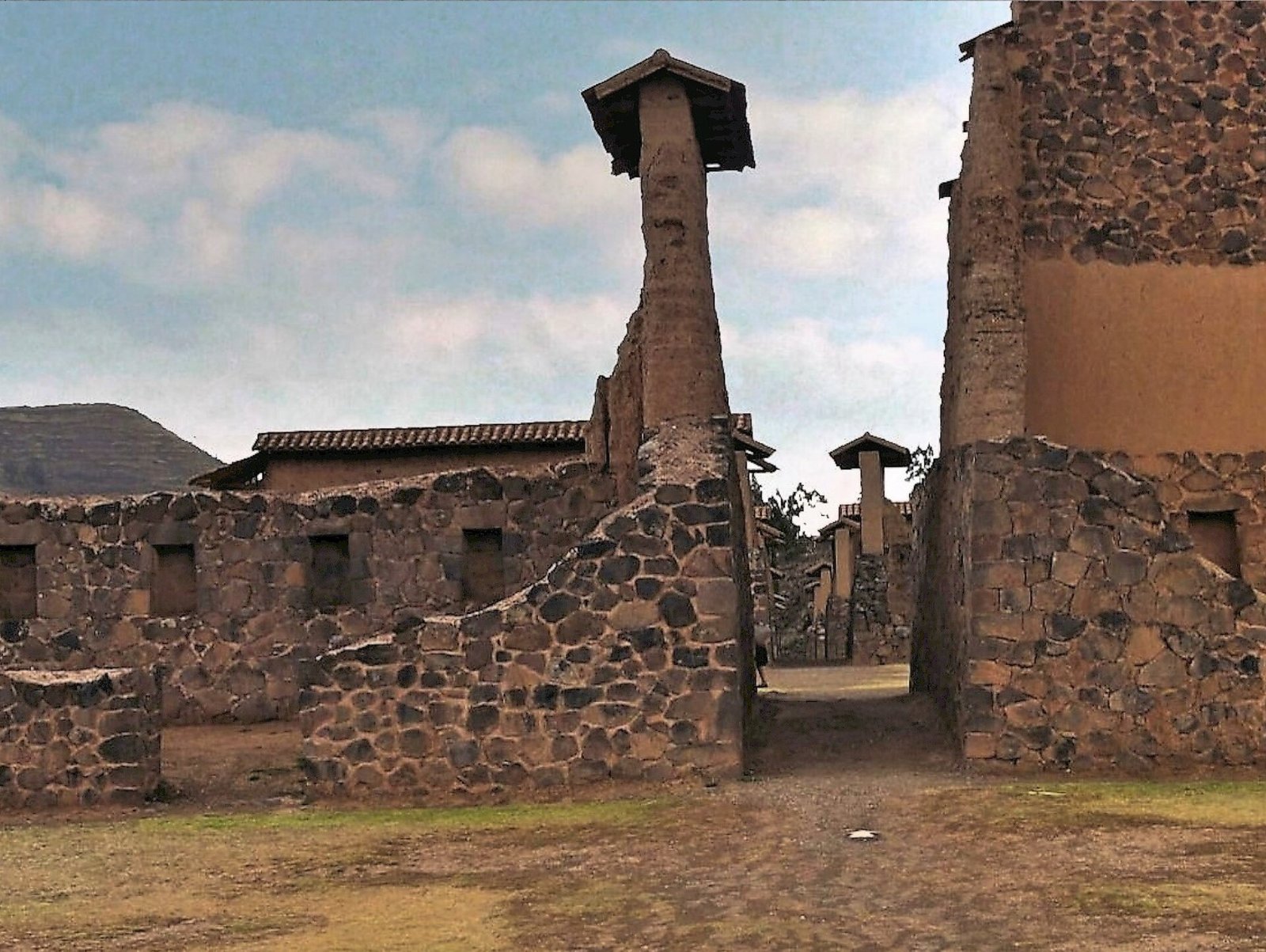
The striking surviving wall belongs to the building traditionally identified as the Temple of Viracocha. Cusco’s culture authority describes a stone base with adobe above, reaching about 46 feet in height. Its materials are as important as its size: this is a useful contrast with the fitted stonework that dominates many visitors’ expectations.
A complex larger than its best-known building
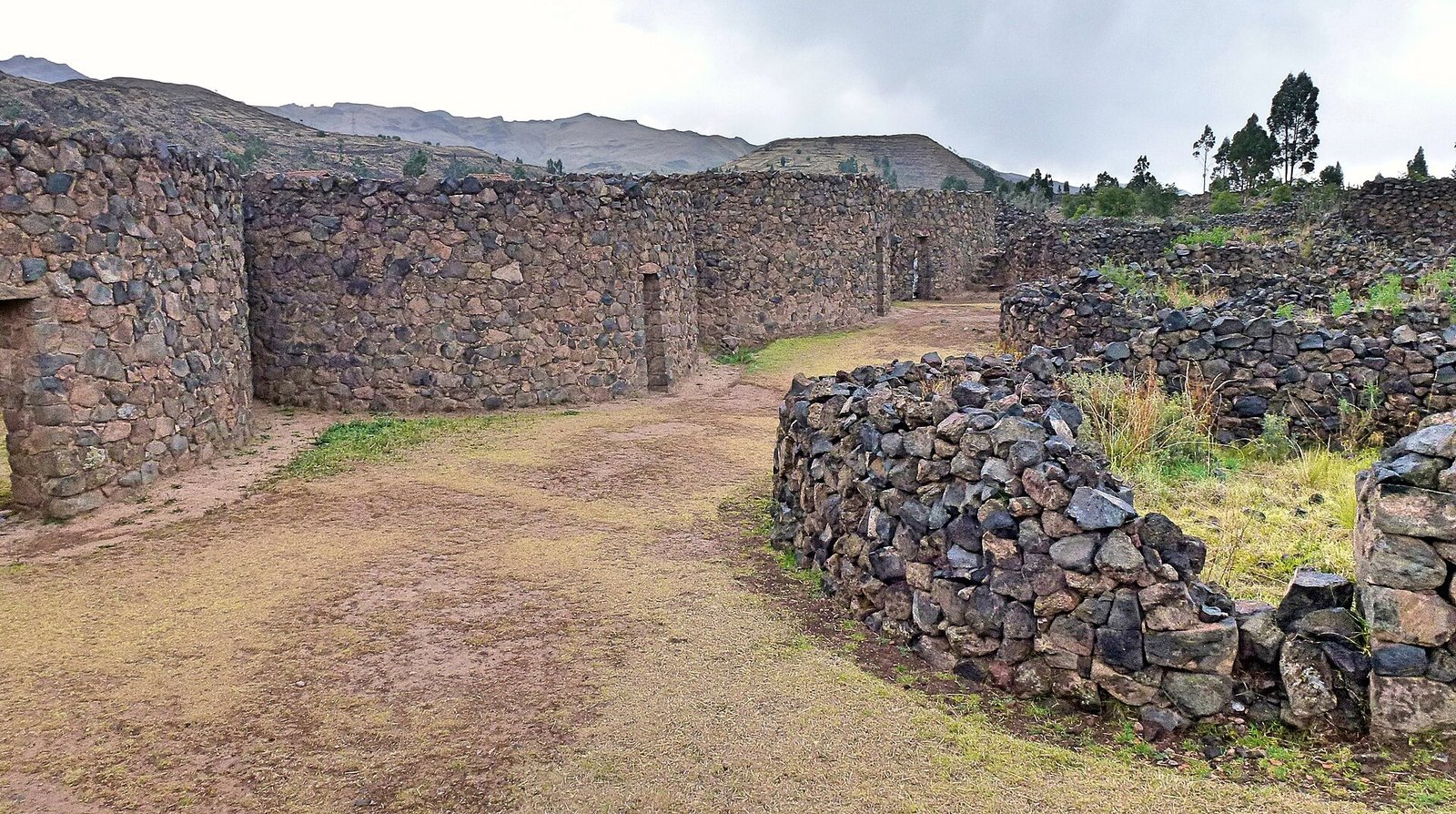
The wider complex includes storage structures, water features and adjoining spaces. These broaden the discussion from a single monument to the activities that sustained a larger complex. Walk the permitted circuit with that wider question in mind.
Read the central wall from bottom to top
The contrast between the worked stone below and adobe above makes construction itself part of the visit. Notice where the materials change and how the surviving supports relate to the space around them. The protective coverings visible today are part of conservation; they should not be confused with a complete surviving Inca roof.
Storage gives the complex another dimension
Round storehouse remains shift attention from a single ceremonial building to the provisioning of a larger place. They invite questions about what was stored, how goods moved and who maintained the system. Exact counts and proposed contents vary between descriptions, so a visitor guide does not need to repeat the largest number to make the complex impressive.
| Focus | What it adds | Keep in mind |
|---|---|---|
| Central building | Stone base and adobe wall | Distinguish original remains from protective coverings |
| Storehouse area | Round structures and organized space | Ask how storage related to the larger complex |
| Road itinerary | A meaningful stop toward the southern Andes | Confirm admission and guiding with the actual operator |
Cusco to Puno: ask what the journey really includes
Some road itineraries make heritage stops along this corridor, but operators and services differ. Confirm the direction, pickup, luggage arrangements, admission and guide service with the actual provider. If you are traveling independently, plan the onward or return connection rather than assuming there will be immediate transport from the entrance. Raqchi deserves time on the ground, not only a name on a transfer list.
Location reference
© OpenStreetMap contributorsApproximate documented photograph location within the site. This is not an entrance marker, accessible-path map or measured walking route.
Location reference; this map does not define an approved route.
Source: Photograph location: Temple de Wiracocha , Raqchi (Peru) (1).jpg
Chronicles, traditions and interpretation
The association with Viracocha appears in colonial accounts, while historical accounts discuss several interpretations of the complex’s functions. Religious, administrative and productive activities need not be forced into one simplistic explanation. Claims about the identification of a particular statue or the exact sequence of construction require specialist sourcing.
Place it in the right journey
Raqchi lies on the corridor toward Puno, substantially farther from Cusco than the northern archaeological sites. It may fit a planned overland journey or a dedicated excursion. Confirm the actual operator’s itinerary before assuming a transfer includes admission, a guide or sufficient visiting time. The existence of a route does not establish what any KOA product includes.
Check entry separately
Do not assume that a Cusco circuit ticket covers Raqchi. Check the site’s current admission arrangements and confirm transport in advance. Fares and entrance prices can change; confirm them directly before travel. Bring questions about both the architecture and the surrounding community, while respecting visitor boundaries and local activity.
Frequently asked questions
Is Raqchi on the northern Cusco ruins circuit?
No. It lies well to the south on the corridor toward Puno and requires a different transport plan.
Is the central structure entirely stone?
No. The surviving wall combines a stone base with adobe above, a distinctive part of the visit.
Does a Cusco–Puno transfer always include Raqchi?
No. A road connection does not guarantee sightseeing stops, admission or a guide. Check the service you are actually booking.
Sources and further reading
- Cusco Culture: Raqchi Archaeological Park Cusco Culture Accessed
- Photograph location: Temple de Wiracocha , Raqchi (Peru) (1).jpg Wikimedia Commons photographer metadata Accessed
Photography credits
Temple de Wiracocha , Raqchi (Peru) (1).jpg by Pierre André Leclercq · CC BY-SA 4.0; Qolqas au Temple de Wiracocha de Raqchi.jpg by Pierre André Leclercq · CC BY-SA 4.0. Display sizes may be reduced by WordPress; photographs retain their original attribution.