
What can you see at Tambomachay?
Tambomachay combines carefully worked masonry with channels and flowing water. Often called the Inca Baths, it is better approached as a place where practical water management and ceremonial interpretations meet, rather than as a confirmed private bathing complex.
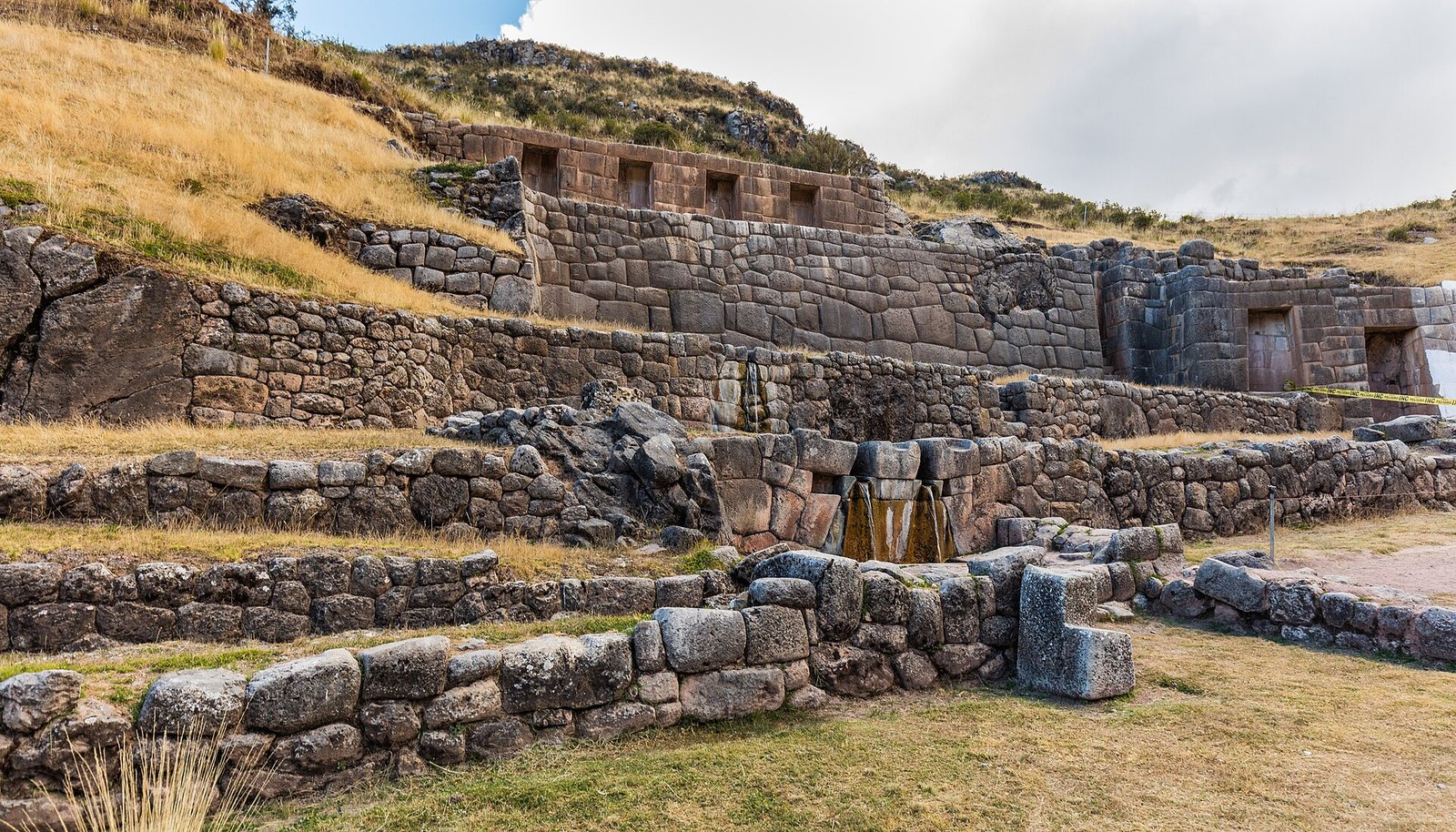
At Tambomachay, running water draws attention before the scale of the architecture does. The fountains and fitted stonework offer a different experience from Cusco’s monumental walls. It is a place to observe how a practical system can also create a carefully composed setting.
Start with the movement of water
The sound and direction of the water give this visit a different rhythm from the monumental spaces of Sacsayhuaman. Observe how channels and outlets relate to the built surfaces. The interest is not simply that water flows, but that its passage was shaped through a carefully composed setting.
Look at the stonework
Notice the fitted blocks, niches and relationship between walls and the hillside. These details help connect the water features with the wider architecture. A short visit can still be rewarding if you pause to observe them instead of treating the fountains as a single photograph stop.
Watch the sequence, not only the final outlet
From the approved viewing area, follow what is visible of the water’s passage through the structure. Compare the regularity of the built edges with the irregular hillside around them. That contrast is part of the engineering achievement. It does not require a claim that the water has miraculous properties or that every channel’s original use is known.
Water and sacred landscape
Ceremonial interpretations are important to the way Tambomachay is understood, but the popular bathing-place name should not limit the conversation. Ask how its water system relates to the surrounding landscape and what evidence supports a particular account. Claims about the exact distant source of the spring water should be treated separately from what can be observed at the fountains.
| Focus | What it adds | Keep in mind |
|---|---|---|
| Fountains | Observe the controlled outlets | Do not enter or interfere with the water |
| Masonry | Compare fitted blocks and niches | Stay behind barriers |
| Wider interest in water | Consider a separate Tipón visit | Allow for a different route south of Cusco |
Tambomachay or Tipón?
They are not interchangeable. Tambomachay fits the northern Cusco circuit and offers a concentrated encounter with fountains and masonry. Tipón, south of the city, opens a broader conversation about terraces and water management. If that subject particularly interests you, visiting both can be meaningful; if time is short, choose the setting that fits your actual route.
What does “Inca Baths” mean?
This popular name is a familiar introduction, not proof of one exclusive function. Interpretations include ceremonial use, rest and practical distribution of water. These explanations should be distinguished from one another. Likewise, a claim that the water comes from a specific distant lake requires evidence, not repetition.
Plan a connected archaeological outing
Pukapukara makes a useful companion stop, while Q’enqo and Sacsayhuaman broaden the circuit. Discuss the order with your guide or driver according to current access and your preferred pace. If your main interest is hydraulic design, Tipón offers a separate, more extensive opportunity to explore that theme south of Cusco.
Respect a working heritage setting
Keep out of the channels and follow barriers and staff instructions. Check the current ticket arrangements before traveling. Uneven ground, weather and the approach walk matter more than a promise that every visitor can complete the site in the same number of minutes. Ask for route details if accessibility is important to your group.
Frequently asked questions
Can visitors bathe in the fountains?
No. The popular name is not an invitation to use an archaeological water feature. Respect the visitor boundaries.
Is Tambomachay the same as Tipón?
No. They are separate sites in different parts of the Cusco area, both useful for exploring water and Inca architecture.
Is the water’s distant source certain?
Do not treat a specific lake-to-site connection as established without a named hydrological study. The visible water system can be appreciated without that claim.
Sources and further reading
- Cusco Culture: Saqsaywaman park and Tambomachay Cusco Culture Accessed
- COSITUC: Circuit I and current ticket conditions COSITUC Accessed
Photography credits
Tambomachay, Cuzco, Perú, 2015-07-31, DD 89.JPG by Diego Delso · CC BY-SA 4.0. Display sizes may be reduced by WordPress; photographs retain their original attribution.