
What is Q’enqo?
Q’enqo is an Inca archaeological site near Sacsayhuaman, known for carved rock, channels and an underground chamber. Its features suggest ceremonial use, but specific stories about burials and rituals should be presented as interpretations, not settled facts.
Q’enqo offers a quieter kind of archaeological looking. Instead of a great façade or a panoramic terrace system, the focus is a mass of rock that people cut, shaped and incorporated into ceremonial space. The site is compact, but a rushed visit can miss the distinction between the features that survive and the stories used to explain them.
Read the rock before the story
At Q’enqo, much of the interest lies in how natural stone was shaped. Instead of searching for another version of the great walls at Sacsayhuaman, look for changes of surface, cut channels and the relationship between the rock and surrounding spaces. Its compact appearance can conceal details that reward a slower visit.
The chamber and its interpretations
A chamber beneath the rock contains a worked stone surface. Visitors often hear it described as a place of sacrifice or mummification. Those labels interpret a space whose original use cannot be established simply by looking at it. A good explanation distinguishes what survives from what scholars or guides infer.
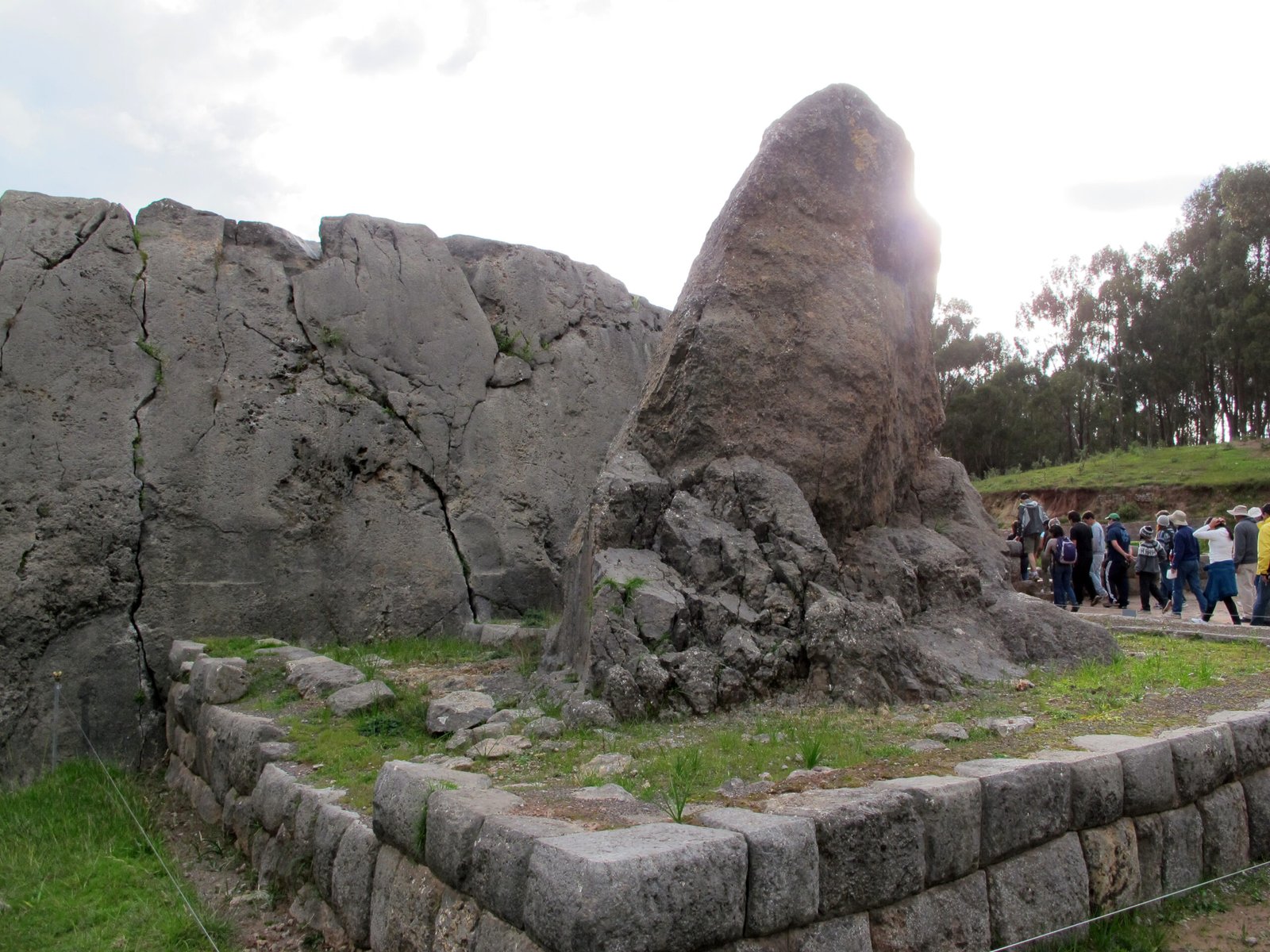
Carved channels and the surrounding enclosure
A channel cut into rock is evidence of deliberate working, but it does not by itself identify the liquid once poured into it. The same care applies to the enclosure often called an amphitheater. That modern label helps describe its arrangement; it does not prove that it functioned like a Roman performance space. Look at the relationship between niches, open ground and the principal rock, then ask how archaeologists interpret those relationships.
Why different spellings appear
Q’enqo, Qenqo and Kenko can appear in maps and visitor material for this place. Use the site name and its location near Sacsayhuaman together when arranging transport. A spelling variation is not evidence of a different attraction, but several places in Peru share similar names, so the wider location still matters.
| Focus | What it adds | Keep in mind |
|---|---|---|
| Cut channels | Deliberately shaped rock | The liquid and exact ritual require evidence |
| Underground chamber | Worked surfaces in a sheltered space | Do not present a royal burial identification as certain |
| Surrounding enclosure | Niches and a relationship to the main rock | Modern descriptive names do not establish ancient function |
A visit for travelers who enjoy questions
This is a good stop for someone interested in sacred landscape and how historians reconstruct past activities. It may be less satisfying if the only goal is a sweeping mountain photograph. Choose the site for what makes it distinct, and let a guide explain uncertainty instead of promising a definitive answer to every feature.
Was this Pachacutec’s burial place?
A proposed identification with Patallacta has led to discussion of a possible connection with Pachacutec’s burial. That identification remains a hypothesis requiring specialist evidence. It should not become a promise that visitors will see a confirmed royal tomb. Keep the question open while appreciating the site’s ceremonial character.
A useful contrast with Sacsayhuaman
These nearby sites work well together because their scale and materials invite different kinds of attention. After monumental masonry, Q’enqo makes carved bedrock the focus. Pukapukara and Tambomachay can extend the same outing, provided your transport and available time support the longer circuit.
Practical considerations
Check the current ticket circuit and access conditions before visiting. Follow staff directions around confined or uneven sections and do not enter closed passages. Ask about the actual walking route if steps or low spaces are a concern. Choose a guide who is comfortable explaining uncertainty rather than replacing it with a dramatic but unverified story.
Frequently asked questions
Is Q’enqo a confirmed tomb of Pachacutec?
A proposed identification with Patallacta has been discussed, but visitors should not be told that this is an established royal tomb.
Are Qenqo and Kenko different places?
Both spellings are commonly used for this site near Sacsayhuaman. Confirm the location as well as the name when arranging a visit.
Is the underground area always accessible?
Access depends on the current circuit and conservation conditions. Follow staff directions and never enter a closed passage.
Sources and further reading
- Cusco Culture: wider Saqsaywaman park Cusco Culture Accessed
- COSITUC: Circuit I and current ticket conditions COSITUC Accessed
Photography credits
Q’enqo.jpg by Haakon S. Krohn · CC BY-SA 3.0. Display sizes may be reduced by WordPress; photographs retain their original attribution.