
What makes Sacsayhuaman worth visiting?
Sacsayhuaman brings together monumental Inca masonry, ceremonial spaces and a broad view over Cusco. Visit to understand how the hilltop complex relates to the city, rather than treating it only as a fortress or a photograph stop.
Above Cusco, Sacsayhuaman changes the scale of the city. The fitted stones are the obvious attraction, but the open spaces between them matter too: this was a landscape of ceremony, authority and movement. A useful visit moves between the close detail of a joint in the masonry and the wider relationship between the hill and the Inca capital below.
Look beyond the largest stones
The first impression is scale: massive fitted blocks form the best-known walls. Slow down and follow their changing angles. The relationships between stone, slope and open space tell you more than an unsupported claim about the weight of a single block. Keep to the permitted paths; the walls are archaeological fabric, not climbing surfaces.
A complex with more than one purpose
The familiar description “fortress” captures only part of the story. Cusco’s culture authority describes a major sacred complex associated with the Inca capital. Ceremonial, political and defensive histories should be considered together. The park also extends beyond the monumental area that most visitors recognize.
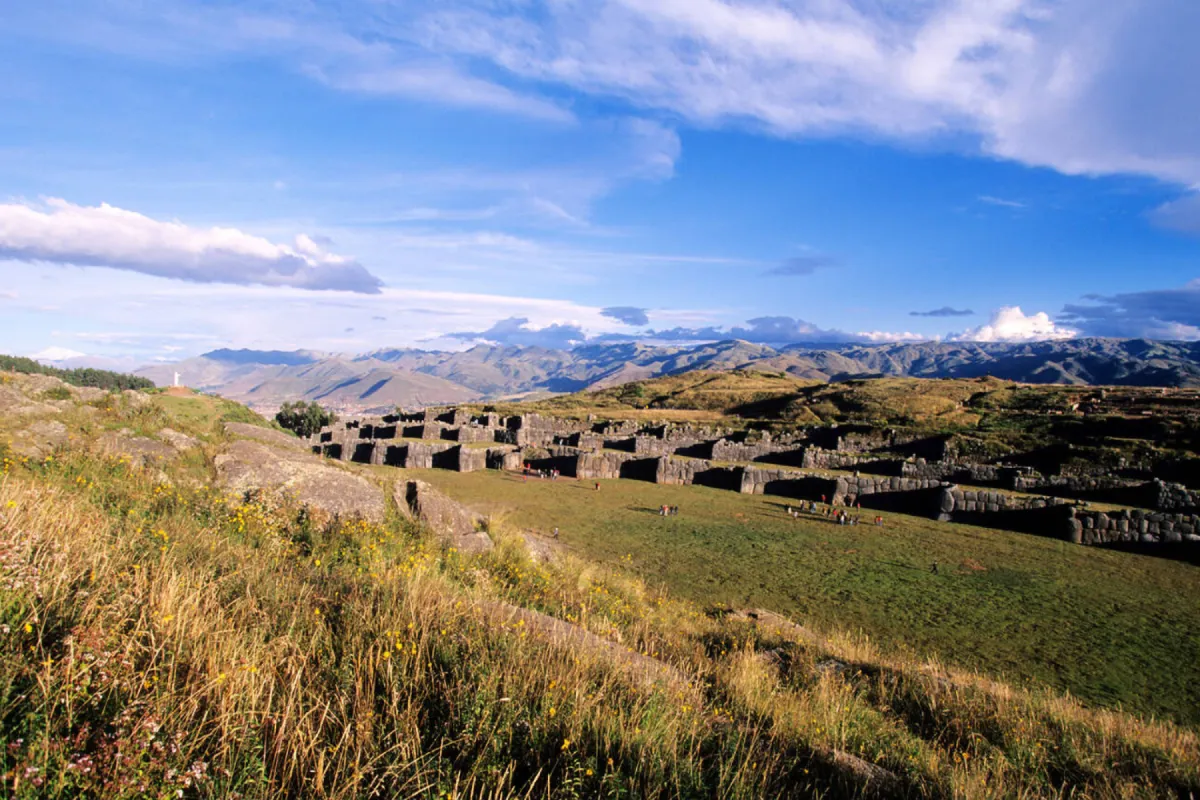
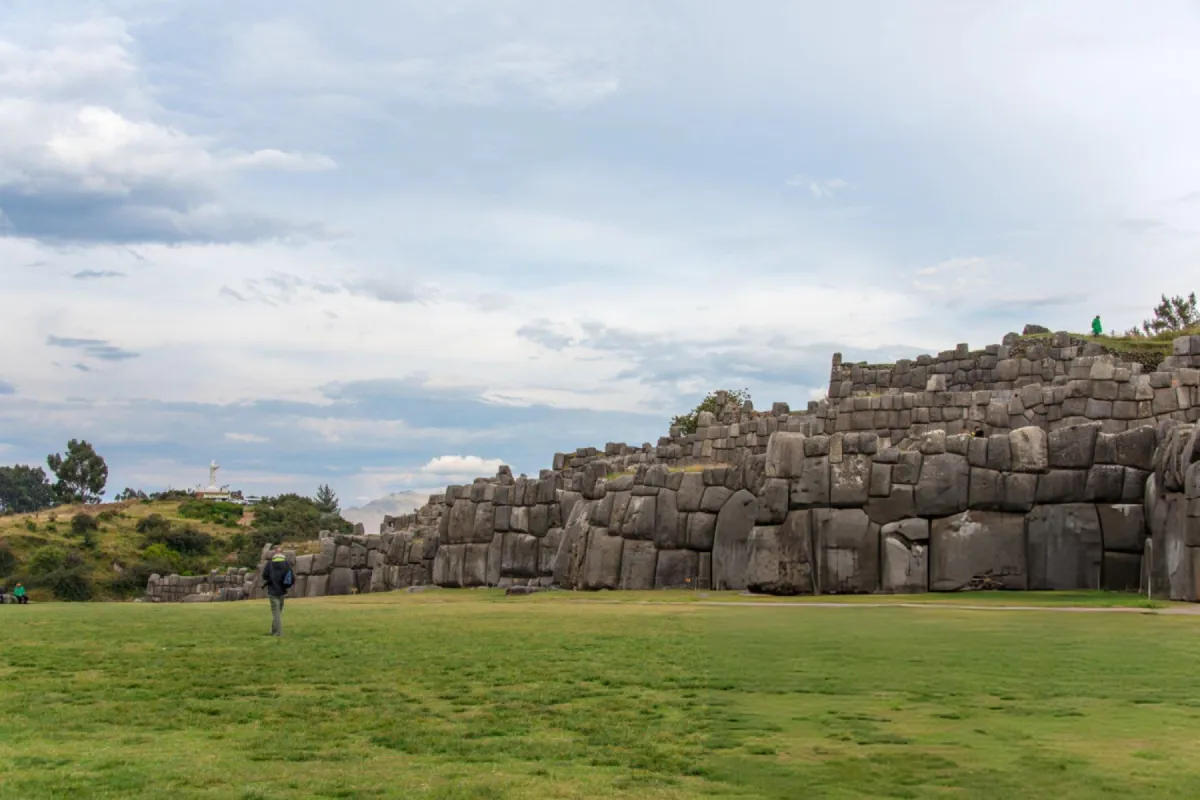
How to read the masonry
Begin with a single stretch of wall. Notice that the blocks are not identical bricks: their edges meet through individually worked shapes. Then step back and follow the changing direction of the wall. This combination of close fitting and large-scale planning is more revealing than counting corners or repeating an unverified weight for the largest stone. Photographs that include a person on the permitted path can convey scale without touching or climbing the structure.
From Inca complex to colonial building material
The site did not remain untouched after the Spanish invasion. Stone was reused in Cusco’s later buildings, which helps explain why surviving lower courses can look so different from the structures a visitor imagines above them. Loss, reuse and conservation are part of the history. A guide can help distinguish surviving foundations from reconstructions and explain why an apparently empty area may still be archaeologically important.
| Focus | What it adds | Keep in mind |
|---|---|---|
| Monumental walls | Shape, scale and fitted joints | Observe from permitted paths; do not climb |
| Open spaces and foundations | How structures relate to the hillside | Ask which remains and interpretations are documented |
| Wider circuit | Contrast with Q’enqo and Tambomachay | Arrange transport and check the current ticket |
Choose the right amount of context
For a first visit, the monumental complex and a view toward Cusco may be the priority. For a deeper archaeological day, connect it with Q’enqo’s worked rock and Tambomachay’s water features. Do not assume every sector named on an old map is open. Ask about the current circuit before deciding how to divide your time.
What to notice during your visit
Compare the monumental walls with the surviving foundations and the natural rock formations elsewhere in the visitor circuit. Ask your guide which features are documented structures and which explanations remain interpretations. Stories about underground passages or extraordinary construction methods should not take the place of archaeological evidence.
Combine it with the northern archaeological circuit
Q’enqo, Pukapukara and Tambomachay offer different experiences: carved rock, a hillside complex and flowing water. Combining them can make a coherent outing, but four stops do not need equal amounts of time. Give the most substantial spaces room in your schedule and arrange transport between sites rather than assuming that they form a short urban walk.
Plan around the place, not a fixed timetable
Confirm current entry arrangements with the official ticket provider and check the park’s access notices before departing. Bring footwear suited to uneven ground and a layer for exposed areas. Choose a pace that leaves time to look closely. If photography is important, discuss the permitted route and avoid obstructing narrow passages for other visitors.
Frequently asked questions
Is Sacsayhuaman included in the Cusco Tourist Ticket?
COSITUC lists Saqsayhuaman in Circuit I. Check the current ticket category, validity and eligibility directly before buying.
Can I visit without climbing the walls?
Yes. The walls are heritage structures to observe, not climbing equipment. Follow the marked visitor circuit and ask staff which sections fit your mobility needs.
Is this the same place as Q’enqo?
No. They are separate archaeological sites within the wider northern Cusco landscape. Each has a distinct layout and visit.
Sources and further reading
- Cusco Culture: Saqsaywaman Cusco Culture Accessed
- COSITUC: Circuit I and current ticket conditions COSITUC Accessed