
Is Pukapukara only a fortress?
Pukapukara is commonly called the Red Fortress, but its hillside position, rooms and circulation spaces also invite interpretations related to movement, administration and rest. It is best understood alongside nearby Tambomachay rather than reduced to a military label.
Pukapukara is easily treated as the short stop between two better-known ruins. Its value becomes clearer when you look outward: the hill, surrounding approaches and built enclosures belong to the same story. The conventional name “Red Fortress” is memorable, but it is only the beginning of an explanation.
Why the setting matters
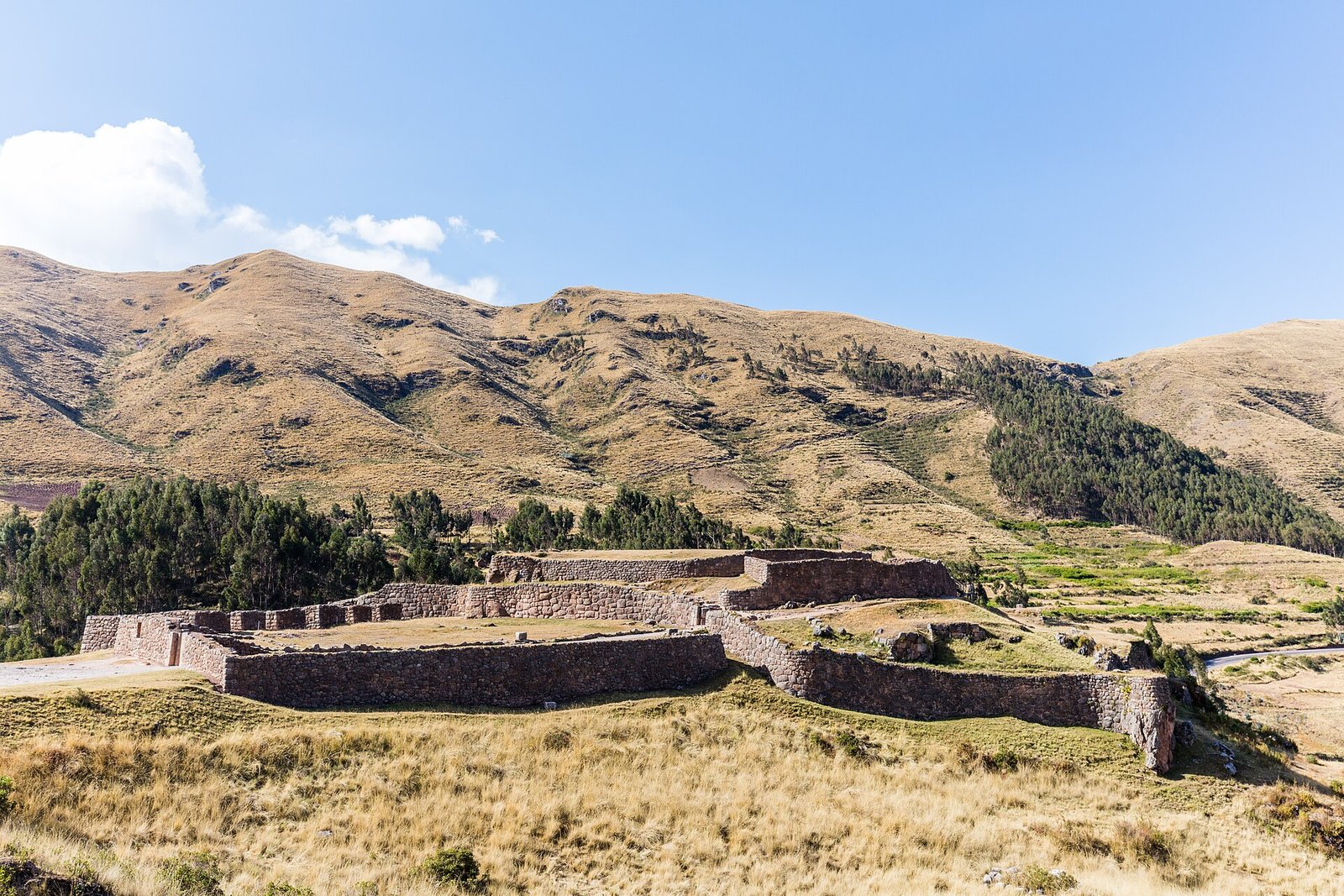
Look outward before concentrating on individual walls. Pukapukara occupies a position from which the surrounding landscape becomes part of the visit. This helps explain why discussions of its purpose often include supervision of movement and connections with other sites. A useful guide relates the surviving structures to their setting.
Rooms, passages and open spaces
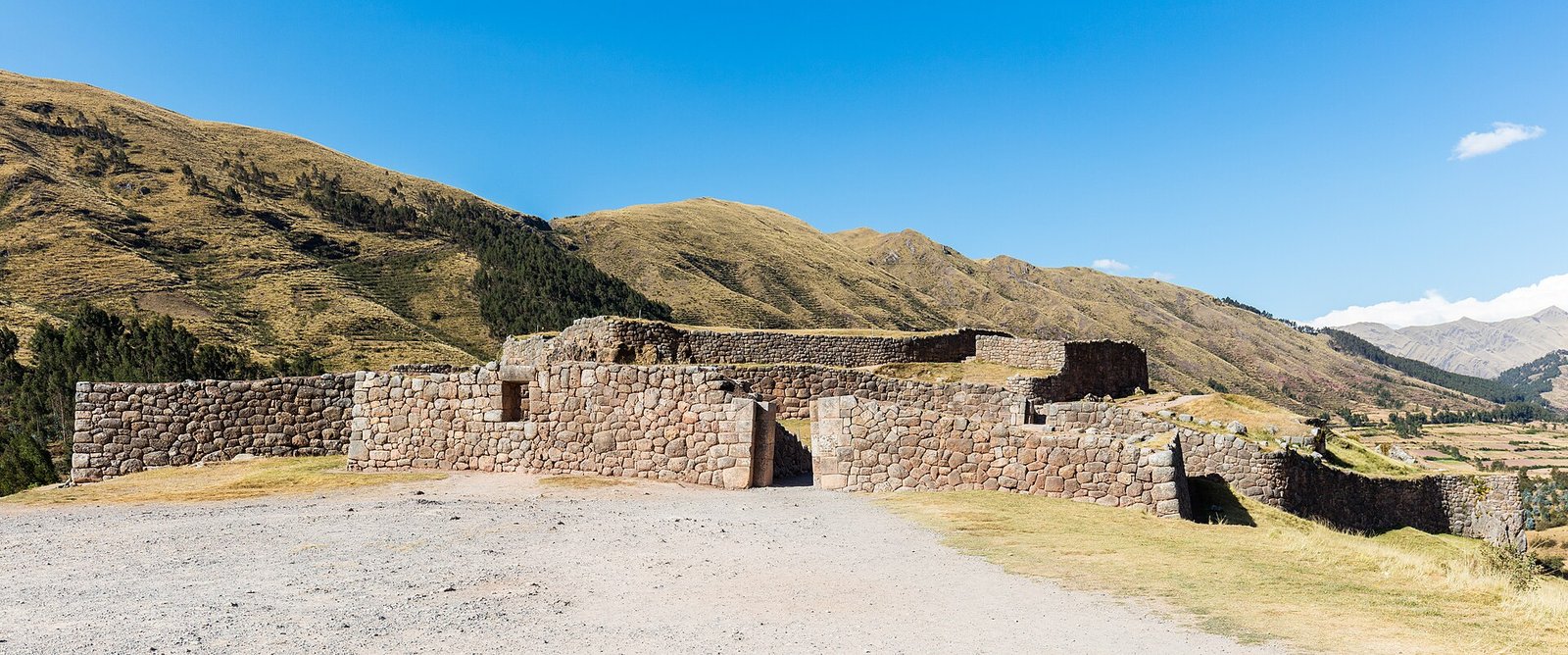
The remains include rooms, internal plazas and circulation routes. Together they suggest organized activity rather than a single isolated lookout. The exact combination of functions remains uncertain. Walking through the permitted circuit is an opportunity to compare how enclosed and open areas fit together.
Understand the place through movement
Try tracing the sequence of an entrance, a passage and an open space from the permitted visitor route. You do not need to assign every room a definite function to appreciate that the layout organized movement. Compare it with Q’enqo, where a single worked rock dominates the experience. Pukapukara offers a different lesson in how architecture can relate to position and circulation.
A shorter stop can still be worthwhile
A site does not need to occupy an entire day to deserve attention. Pukapukara works best when the visit has a clear purpose: reading the landscape, looking at the layout and comparing it with Tambomachay. If the schedule allows only a photograph through a vehicle window, little of that context survives. Discuss the stop with your guide before agreeing to an overloaded circuit.
| Focus | What it adds | Keep in mind |
|---|---|---|
| Landscape | Position above surrounding approaches | Why was this location useful? |
| Built spaces | Rooms, passages and open areas | How might movement have been organized? |
| Nearby Tambomachay | Water features and fitted masonry | What differs between the two places? |
Photograph the setting as well as the walls
A broad view shows how the enclosure sits in the hills; a closer image reveals changes in masonry and level. Stay within visitor boundaries and leave paths clear. The red appearance associated with the name can vary with stone, soil and light, so avoid expecting the uniformly saturated color of an edited promotional picture.
A name is not a complete explanation
“Red Fortress” is the conventional translation used in visitor descriptions. It does not establish that every part of the complex served a military purpose. Administrative, ceremonial and resting-place interpretations deserve careful explanation rather than being presented as interchangeable certainties.
Pair it with Tambomachay
The two sites can form a useful contrast within the northern Cusco circuit. At Pukapukara, pay attention to position and layout; at Tambomachay, focus on water and masonry. Arrange a safe transfer and follow the actual visitor access points rather than improvising a shortcut across roads or archaeological land.
Keep legends separate from access advice
Local stories describe tunnels connecting Pukapukara with other places. Such connections have not been demonstrated. They are not visitor routes. Stay in open areas, check current ticket conditions and allow time to enjoy the landscape without climbing on the remains.
Frequently asked questions
Does the name prove it was only a military fortress?
No. A name used in modern visitor descriptions does not establish every historical function. Administrative and resting-place interpretations are also discussed.
Can I walk through tunnels to another ruin?
No confirmed public tunnel route connects these sites. Never enter closed or unmarked passages.
Does it make sense to visit with Tambomachay?
Yes, the sites provide a useful contrast on the northern circuit. Confirm transport and current visitor access rather than assuming an unrestricted walking connection.
Sources and further reading
- COSITUC: northern Cusco circuit COSITUC Accessed
Photography credits
Puca Pucara, Cuzco, Perú, 2015-07-31, DD 79.JPG by Diego Delso · CC BY-SA 4.0; Puca Pucara, Cuzco, Perú, 2015-07-31, DD 80.JPG by Diego Delso · CC BY-SA 4.0. Display sizes may be reduced by WordPress; photographs retain their original attribution.